
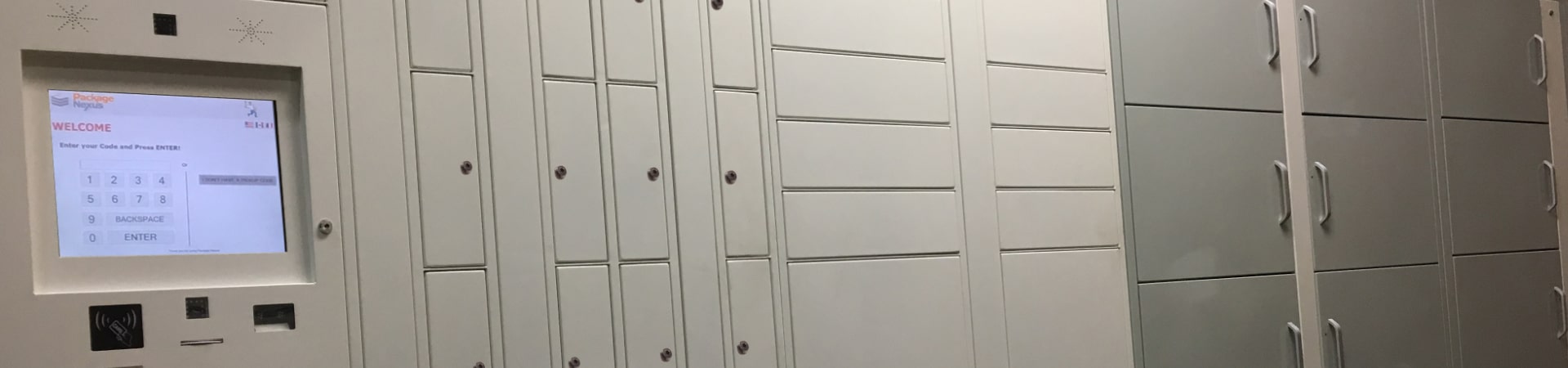

How an indoor smart parcel locker works
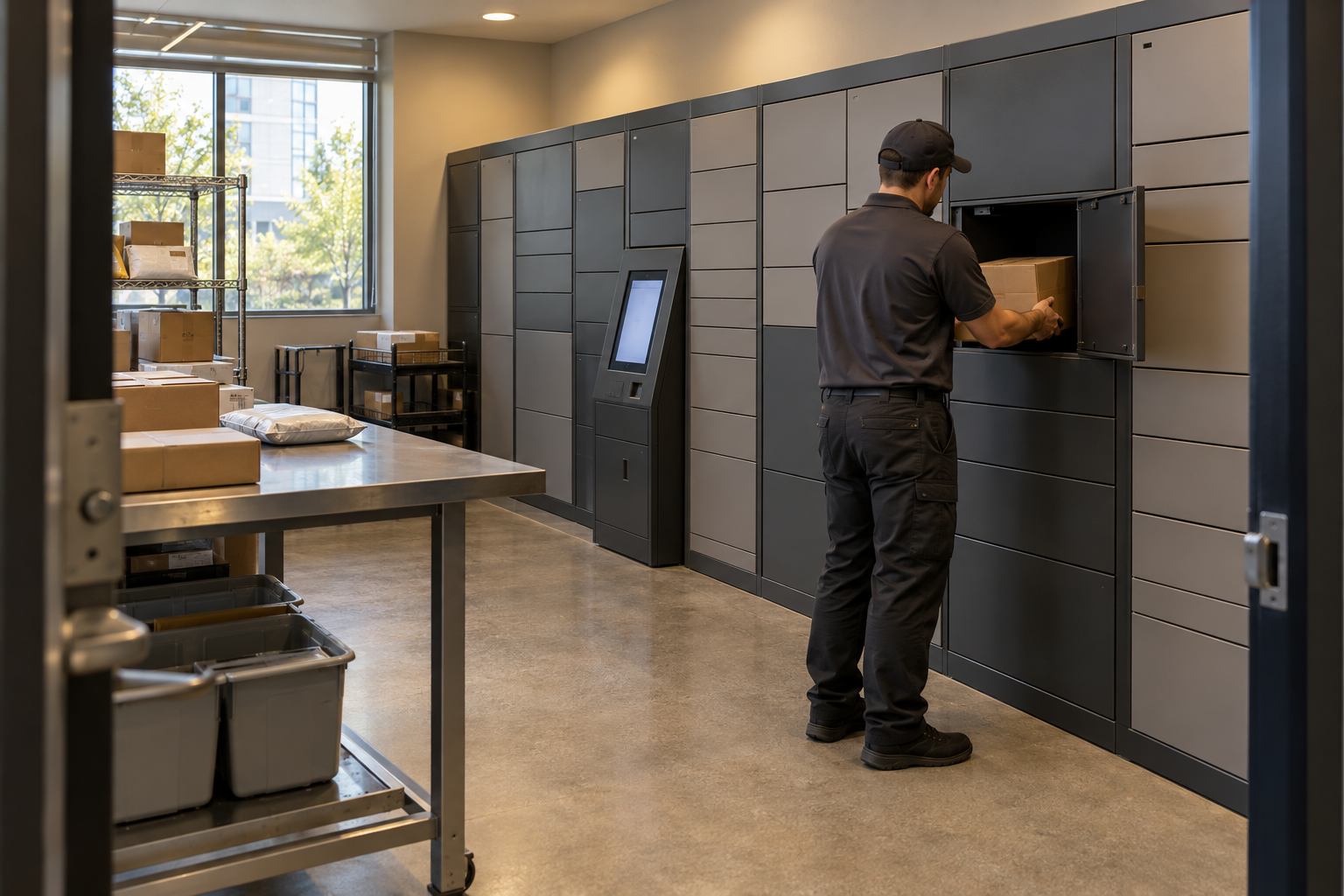
An indoor smart parcel locker is a secure electronic package-delivery point installed inside a building such as an apartment community, condominium, student residence, or multifamily mailroom. Instead of leaving a parcel in an open lobby or routing every delivery through the leasing office, a carrier uses the locker kiosk to connect a package with its recipient and place it in a controlled compartment.
The kiosk, locker doors, sensors, and software work together. The software keeps track of the delivery and pickup, while the electronic lock limits access to the assigned compartment. Once the delivery is recorded, the system sends the resident pickup information so the parcel can be collected when convenient, subject to the building’s access policies.
The four steps from delivery to pickup
The exact screen prompts depend on the system configuration, but the basic sequence is straightforward: the standard smart-locker transaction—identify, assign, notify, and release.
Carrier identifies
recipient and delivery
Locker assigns
available compartment
Resident receives
secure pickup details
Credential opens
the assigned locker
- Carrier identifies the delivery. The carrier follows the kiosk prompts and identifies the intended resident, using the available lookup or scanning workflow. This step connects the package to the right recipient record.
- System assigns an available compartment. The software uses the selected package size and locker availability to direct the carrier to a suitable door. The carrier places the parcel inside and closes the compartment.
- System records the event and notifies the resident. The locker software logs delivery activity and creates pickup instructions for the recipient. Depending on the configuration, the resident may receive a one-time code, barcode, or another approved access credential by email, text, or a supported mobile experience.
- Resident opens the assigned door and collects the parcel. At the kiosk, the resident enters or scans the pickup credential. The system verifies it and releases the linked electronic lock. The pickup is recorded, updating package status and locker availability.
What makes the locker “smart”?
A conventional cabinet stores an item. A smart parcel locker coordinates the people, doors, and records involved in a delivery. Its key parts include:
- Electronic locks and compartment controls. Each door is controlled by the system so a valid delivery or pickup action opens the appropriate compartment.
- A carrier and resident interface. A kiosk with a touchscreen guides delivery and retrieval. Package Nexus lists a 15-inch touchscreen, barcode scanner, RFID reader, and advanced kiosk workflows among its technology components.
- Industrial-grade locker construction. Package Nexus offers heavy-duty steel locker construction, including 12-gauge galvanized steel in applicable configurations; confirm the exact enclosure specification for the selected system.
- Package-management software. The software associates a delivery with its intended recipient, tracks locker activity, and supports notifications and management oversight.
- Sensors and activity records. Configured locker sensors can help record package placement, door activity, and removal, making the transaction easier to verify.
- Connectivity and local operation. Cloud connectivity supports communication and data access. Package Nexus describes secure locker-to-cloud connections and continued functionality during internet interruptions; the exact functions available offline depend on system configuration and should be confirmed for a project.
- Error-handling workflows. Package Nexus On-Auto-Pilot is designed to address common process errors, including an unregistered delivery, an empty-locker pickup attempt, a delivery session timeout, or a door left open. Recovery behavior depends on the configured workflow.
How Package Nexus applies this workflow in multifamily buildings
Package Nexus combines locker hardware with resident access, package tracking, and management tools. Its multifamily configurations are planned around the building’s package volume, room or wall dimensions, package-size mix, resident access needs, and delivery patterns. A package locker can support daily parcel deliveries while reducing routine handoffs through the leasing office.
Package Nexus lists an industrial-grade computer, a 15-inch touchscreen kiosk, barcode scanning, RFID, secure cloud connectivity, and configurable smart-locker layouts as elements of its platform. Its multifamily solutions also use recipient-specific pickup information and activity tracking. Confirm final dimensions, compartment mix, connectivity, notification channels, integrations, and any accessibility or temperature-control requirements during project planning.
For buildings with frequent large deliveries or seasonal peaks, a property may combine standard locker compartments with oversized storage or a managed package-room workflow. Indoor placement can keep equipment close to a mailroom or resident circulation path and away from direct weather exposure. The best configuration depends on available space, resident access rules, expected volume, and the types of parcels delivered.
Practical use cases for indoor smart parcel lockers
- Apartment and condominium deliveries. Residents collect online orders without coordinating a handoff with the leasing office, while property teams have a recorded delivery and pickup workflow.
- Student and workforce housing. A shared package room can handle deliveries throughout the day while residents retrieve them around class or work schedules, subject to building entry hours.
- Multifamily mailrooms with high delivery volume. Configurable compartments and activity records help organize incoming parcels, reduce open-area accumulation, and make package status easier to check.
- Mixed parcel sizes or special delivery needs. A planned system can include different compartment sizes, oversized options, or temperature-controlled compartments when the use case and selected configuration support them.
What happens when something goes wrong?
Real delivery environments include missed prompts, timeouts, incorrect recipient choices, and doors that do not close fully. Smart locker software can use event records and configured rules to guide a correction or flag the transaction for follow-up. Package Nexus’s On-Auto-Pilot workflows are designed to handle several common delivery and pickup mistakes automatically, helping maintain a clearer record and reduce manual troubleshooting. The precise response varies by event and configuration; properties should review these workflows during implementation and staff training.
What to evaluate before installing an indoor system
- Package demand. Review average and peak daily deliveries, seasonal surges, and how long parcels typically remain in lockers.
- Compartment mix. Estimate small, medium, large, and oversized package shares; avoid sizing only from the apartment count.
- Room and resident circulation. Check wall length, depth, clearances, door swings, queue space, lighting, and the path residents use to enter the mailroom.
- Power and network. Confirm electrical service, network availability, signal conditions, and any backup or continuity expectations.
- Access and inclusion. Review building access hours, kiosk placement, reachable compartments, language needs, and the property’s accessibility requirements.
- Operating workflow. Decide who can access the system, how resident records are maintained, which notifications are used, and how oversized or unclaimed items are handled.
A simpler, more accountable package handoff
An indoor smart parcel locker works by linking a recipient record to an available compartment, securely controlling the door, and recording the delivery and pickup. For apartment communities, that creates a practical self-service path between a carrier’s delivery and a resident’s collection. Package Nexus brings that process together with configurable hardware, digital access, package tracking, and On-Auto-Pilot error-handling workflows.
Planning an indoor system? Share your floor plan, unit count, package volume, and operating requirements with Package Nexus to discuss a configuration for your building.
Frequently Asked Questions
How does an indoor smart parcel locker work?
A carrier uses the locker kiosk to identify the intended recipient and place a parcel in an available compartment. The software records the delivery and sends secure pickup instructions. The resident enters or scans the credential at the kiosk, the assigned electronic lock opens, and the pickup is recorded.
How does a resident open a smart parcel locker?
The resident follows the pickup instructions and enters or scans the credential supported by the property’s system, such as a one-time access code or barcode. The locker verifies the credential and opens the compartment associated with that delivery. Buildings may use different notification and access options.
Are indoor smart parcel lockers secure?
They provide a controlled handoff: the carrier places the parcel in a locked compartment, and the system releases the assigned door after an authorized pickup action. Electronic locks and transaction records can improve package accountability. Security also depends on building access, credential handling, installation, and operating practices.
What happens if a carrier forgets to register a package?
The result depends on the locker’s software and configuration. Package Nexus On-Auto-Pilot is designed to address unregistered delivery scenarios and other common workflow errors. The property should confirm the specific recovery steps during system planning and training.
Can indoor smart lockers accept oversized packages?
They can be planned with a range of compartment sizes, including larger compartments where available. A package that exceeds the selected locker dimensions may need an oversized storage or package-room process. Review actual package measurements and peak volume before choosing the layout.
Can residents pick up packages after the leasing office closes?
Smart lockers support self-service pickup, so residents do not need a staff member to hand over each parcel. Actual pickup availability depends on when residents can enter the building or mailroom and the access rules set by the property.
Do indoor parcel lockers need an internet connection?
Connectivity supports cloud communication, system administration, and data exchange. Some systems can continue selected functions during an internet interruption, but offline behavior varies. Confirm which delivery, pickup, notification, and synchronization functions remain available in the chosen configuration.
Can an indoor locker system send package notifications automatically?
Yes. A configured system can send recipient-specific pickup information after a delivery is recorded. Available channels and timing depend on the deployment, resident contact data, and notification settings.
Can an indoor locker system work with property-management software?
Integration options depend on the property-management platform, available data exchange methods, resident-data rules, and project requirements. Package Nexus can review desired integrations and data workflows during planning.
How do you choose the right indoor smart parcel locker size?
Start with actual daily and peak package counts, the distribution of package dimensions, resident pickup patterns, and the space available for the installation. Also consider large-item overflow, room circulation, accessibility, power, network access, and whether special storage is needed.

Package Nexus is the global technology leader and provider of The World's Most Advanced Smart Parcel Lockers for efficient and most simplified package management for multifamily communities, retailers, universities, libraries, corporate offices, groceries, and more. Package Nexus unique and patented technology offers a fix for human errors at the time of package deliveries and pickups. Package Nexus solutions help property, store, and office managers to improve their operations, reduce operating costs, and increase customer satisfaction at the same time. Package Nexus offers its entire suite of solutions globally.
USEFUL LINKS

© 2017-2026 Package Nexus