

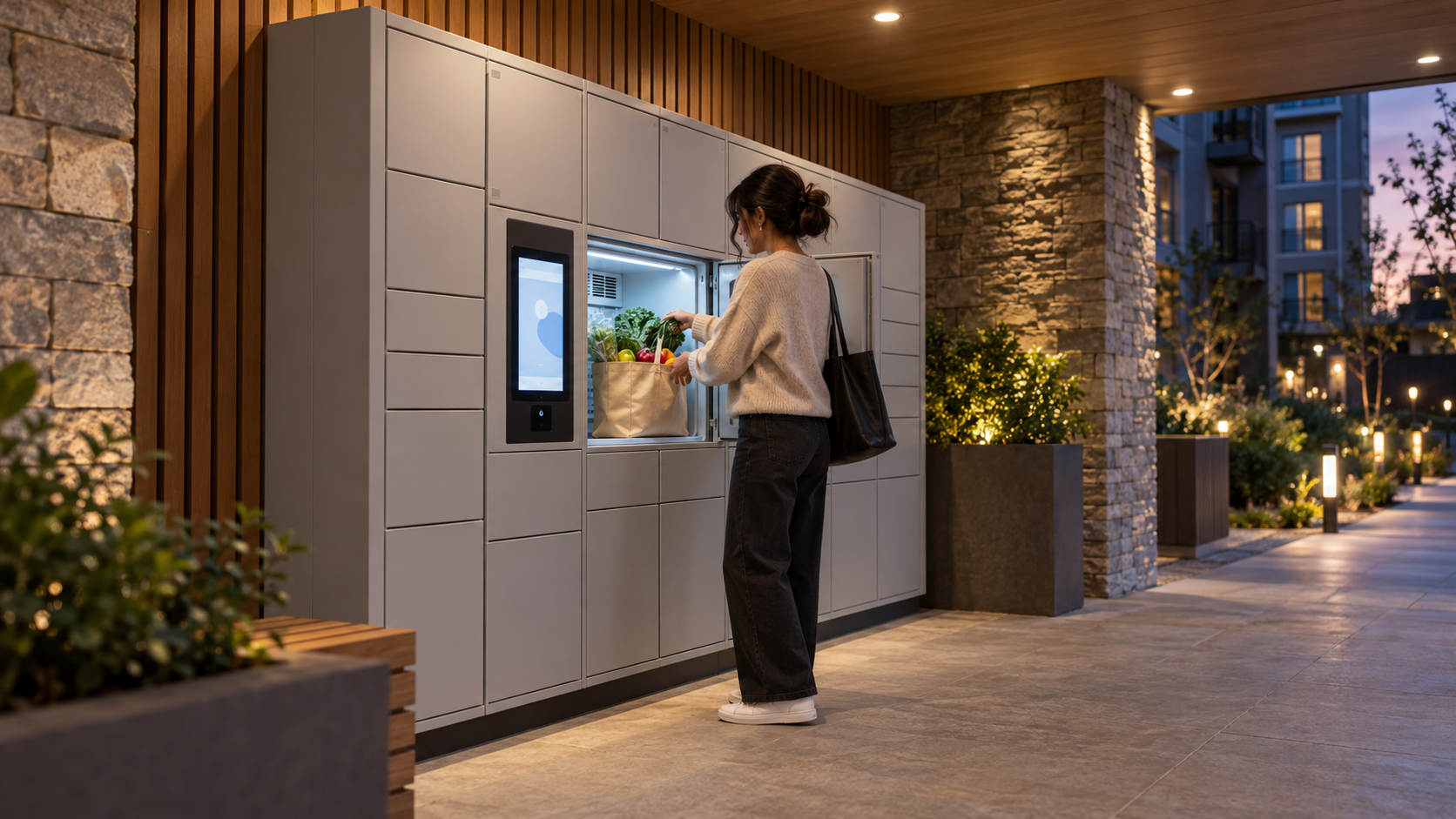
Grocery orders, meal kits, and prepared foods are convenient to receive, but they need an appropriate handoff after delivery. Refrigerated smart lockers provide a secure pickup point with a refrigerated, freezer, or heated zone selected for the item. A refrigerated locker can help keep properly chilled food cool while it waits for pickup, reducing exposure to room conditions and giving residents or customers more flexibility.
The locker is one link in the food’s cold chain. Safe results still depend on correct preparation, packaging, transportation, temperature settings, sanitation, and pickup timing. Package Nexus offers configurable temperature-controlled locker options for Multifamily communities, retailers, grocery operators, offices, and other sites that manage recurring deliveries.
Quick answer
Temperature-controlled lockers keep eligible deliveries in a designated chilled, frozen, or heated compartment until collection. Refrigerated lockers help slow warming when food arrives already chilled and the compartment is configured for the food’s requirements. They are holding equipment, not a substitute for rapid cooling, safe food handling, temperature verification, or prompt pickup.
How a refrigerated locker handoff works
1. Food is prepared and delivered at the right temperature.
The grocery provider or delivery team packs and transports the order according to the food’s handling instructions. A locker should not be treated as a device for rapidly cooling warm food.
2. The courier chooses the correct compartment.
The delivery workflow identifies a refrigerated zone for suitable chilled items. Separate, access-controlled compartments help keep orders organized and assigned to the intended recipient.
3. Refrigeration supports cold holding.
The refrigeration system removes heat from the cooled area. The compartment and closed door help limit heat entering between access events. Exact controls and performance depend on the selected model and site conditions.
4. The recipient receives access details and collects the order.
Smart locker software can associate the delivery with a recipient and send pickup information. Self-service access can reduce the time an order waits for a staffed handoff, subject to the site’s access policy and system configuration.
What temperature should a food locker maintain?
There is no single temperature that fits every food or operating plan. Follow the product label, supplier instructions, and applicable local requirements. As general U.S. references, the FDA advises keeping a household refrigerator at or below 40°F. The FDA Food Code model uses 41°F or below for cold holding of time/temperature control for safety foods in covered food-service settings. Local adoption and requirements can vary.
Package Nexus has published a 34–44°F range for its refrigerated locker spaces. Because that published range extends above 41°F, operators handling foods that require cold holding at or below 41°F should confirm the specific model, set point, measured operating range, temperature-verification method, and site procedure before use. A stated range alone does not establish suitability or regulatory compliance for every product or application.
A locker supports freshness; it does not make unsafe food safe
Refrigeration slows warming and can slow the growth of many microorganisms, but it does not sterilize food, reverse temperature abuse, or preserve food indefinitely. It cannot correct problems that occurred during preparation, packaging, or transportation. Build the locker into a complete handoff procedure that defines accepted items, packaging, delivery checks, temperature verification where required, pickup windows, cleaning, and removal of unclaimed or compromised food.
The FDA advises refrigerating perishables promptly and notes that food requiring refrigeration should not remain at room temperature for more than two hours, or one hour when the air temperature is above 90°F. The appropriate process for a particular food or business should follow applicable rules and the site’s approved food-safety plan.
Where food pickup lockers create value
- Multifamily communities Residents can collect grocery and meal deliveries on their own schedule, including outside leasing-office hours. Access codes and a designated pickup point can reduce reliance on staff to receive and sort every order.
- Grocery stores and specialty food retailers: A controlled pickup point can support online order collection, separate orders, and help manage counter traffic. Compartment mix and pickup workflow should reflect order sizes and peak periods.
- Restaurants and meal providers: Reserved compartments can organize scheduled orders and after-hours handoffs. Hot holding and chilled holding are different uses and should be designed and operated as separate temperature zones.
- Workplaces, campuses, and care settings: Temperature-controlled pickup may support approved food or other temperature-sensitive deliveries when site procedures, access controls, and the selected unit fit the use case.
Package Nexus options for a food-delivery workflow
Package Nexus offers temperature-controlled smart lockers in refrigerated, freezer, and heated configurations, alongside ambient-temperature compartments. Indoor or outdoor layouts can be planned for the site, available space, expected delivery volume, compartment-size mix, and pickup pattern. The proposed configuration should specify the exact temperature range, operating limits, temperature monitoring or alert capabilities, and environmental suitability for the installation location.
Package Nexus product information describes refrigerated spaces at 34–44°F and identifies grocery, beverage, medication, and other temperature-sensitive deliveries as potential use cases. The smart locker platform also supports recipient-specific pickup credentials and delivery records. Package Nexus On-Auto-Pilot workflows are designed to address common delivery and pickup exceptions; the exact behavior depends on configuration and should be reviewed during project planning.
What to evaluate before choosing a refrigerated locker
| Evaluation Area | Questions to Resolve |
|---|---|
| Temperature fit | Match the specified set point and verified operating range to the products and rules at the site. |
| Temperature verification | Establish how temperatures will be measured, documented, and reviewed; confirm monitoring and alert functions in writing. |
| Volume and dwell time | Estimate average and peak deliveries, seasonal surges, compartment sizes, and typical collection intervals. |
| Installation environment | For outdoor projects, confirm the exact model’s weather rating and operating limits, plus power, drainage, sun exposure, connectivity, access, and service needs. |
| Cleaning and exception handling | Assign responsibility for routine cleaning, spills, refrigeration issues, open doors, expired pickup windows, and abandoned orders. |
| Delivery and recipient workflow | Make temperature zones easy to identify and verify how couriers register orders and how recipients receive and use pickup details. |
A more convenient grocery handoff
Smart temperature-controlled lockers bring secure access and temperature-specific storage together in one pickup point. For properties and businesses receiving recurring grocery, meal, or other approved chilled deliveries, a well-specified system can make collection more convenient while giving operators a defined process for delivery, verification, and pickup. For a site-specific recommendation, contact Package Nexus about indoor or outdoor layouts, temperature options, compartment mix, and software workflow.
Explore Package Nexus temperature-controlled lockers →
Frequently Asked Questions
How do temperature-controlled lockers keep food fresh?
They hold eligible deliveries in a chilled, frozen, or heated compartment selected for the item. For refrigerated food, the system helps keep properly chilled items cooler while they wait for collection, reducing exposure to ordinary room conditions. Food should arrive correctly handled, remain within its required temperature range, and be picked up within the site’s defined window.
Do refrigerated lockers cool warm food quickly?
No. A refrigerated locker is generally intended for cold holding, not rapid cooling of hot or warm food. Food should be cooled and packaged through an appropriate food-safety process before placement. Confirm allowed uses and instructions for the specific model.
What temperature are Package Nexus refrigerated lockers?
Package Nexus has published a 34–44°F range for refrigerated locker spaces. Confirm the exact set point and verified operating range for the proposed configuration. Some foods and food-service procedures require cold holding at or below 41°F, so do not assume every setting in a published range suits every product.
Can refrigerated lockers store groceries, meal kits, and prepared food?
They may support packaged groceries, meal kits, beverages, or prepared-food handoffs when the storage instructions, packaging, locker temperature, and site procedures are compatible. Operators should define accepted products and exclude items that require different conditions or a direct handoff.
Do temperature-controlled lockers prevent foodborne illness?
No. A locker alone cannot guarantee food safety. Refrigeration can help slow warming, but safety also depends on preparation, transport, temperature checks, sanitation, pickup time, and the food’s handling requirements. The food provider and site operator should follow applicable procedures.
Can temperature-controlled lockers be installed outdoors?
Package Nexus offers indoor and outdoor smart locker solutions. Outdoor temperature-controlled projects should be specified for the exact location and climate. Confirm weather exposure ratings, operating limits, power, drainage, connectivity, service access, and refrigeration performance in expected ambient conditions.
Can one locker system include refrigerated, frozen, and heated compartments?
Package Nexus offers refrigerated, freezer, and heated configurations. The available combination depends on the project design. Each zone should be clearly identified and supported by procedures appropriate to the products placed there.
How long can food stay in a refrigerated locker?
There is no universal safe dwell time for all foods. Follow the product label, supplier instructions, applicable local requirements, and the site’s approved operating plan. Set pickup windows, monitor exceptions, and remove unclaimed items according to that plan.
Can customers pick up groceries after business hours?
Smart lockers can support self-service access beyond staffed counter hours when the site’s access policy and system configuration allow it. Recipients use the assigned pickup information to collect the delivery.
What should a business verify before installing a food locker?
Verify the required temperature range, set point and measurement method, compartment sizes, delivery volume, indoor or outdoor suitability, cleaning and service responsibilities, power and connectivity, notification workflow, pickup window, and applicable food-handling rules. Request written confirmation for the proposed configuration.

Package Nexus is the global technology leader and provider of The World's Most Advanced Smart Parcel Lockers for efficient and most simplified package management for multifamily communities, retailers, universities, libraries, corporate offices, groceries, and more. Package Nexus unique and patented technology offers a fix for human errors at the time of package deliveries and pickups. Package Nexus solutions help property, store, and office managers to improve their operations, reduce operating costs, and increase customer satisfaction at the same time. Package Nexus offers its entire suite of solutions globally.
USEFUL LINKS

© 2017-2026 Package Nexus