


Can temperature controlled smart parcel lockers be installed outdoors
Outdoor Temperature-Controlled Towers for builders and property operators
Yes. Package Nexus offers Temperature-Controlled Towers for outdoor as well as indoor installations. Outdoor projects require the appropriate exterior configuration, a site-specific review, and a temperature specification matched to the packages being stored. A weather-resistant cabinet alone does not make its compartments refrigerated, and cooling the kiosk electronics does not necessarily cool the parcels.
For builders, this creates an opportunity to add convenient, secure pickup without consuming valuable lobby space. The strongest solution combines suitable temperature control, durable construction, reliable power and connectivity, and automated verification of delivery and pickup.
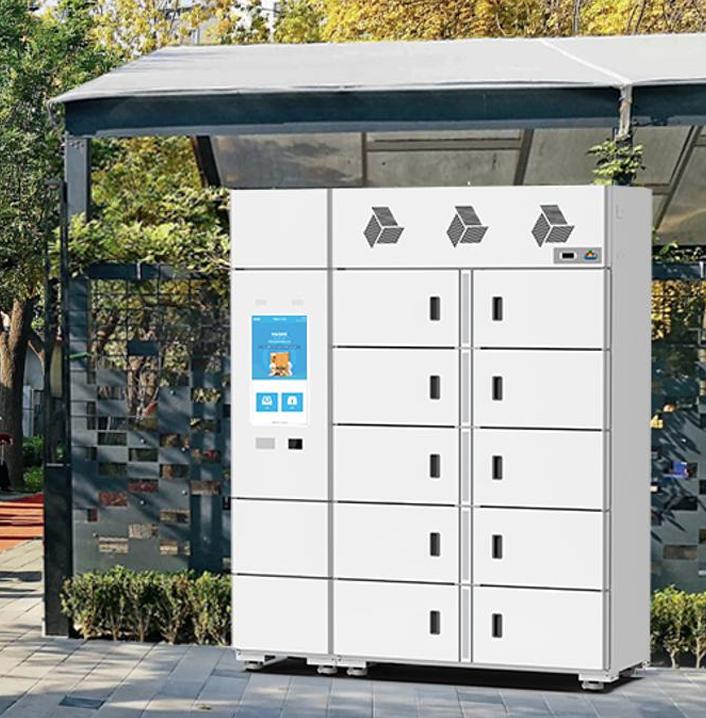
A better starting point for outdoor package planning
Start with the delivery requirement: ordinary parcels, goods needing moderated storage temperatures, refrigerated orders, or another defined temperature category. Then select outdoor smart parcel lockers and the appropriate Temperature-Controlled Towers as one coordinated system. Indoor models remain an option where the building offers a suitable protected location.
What outdoor temperature control really means
Three separate requirements must be addressed. Weather protection manages exterior exposure. Electronics protection keeps the controller and screen within their operating conditions. Package temperature control manages the storage environment around the delivered goods. A proposal should identify which of these functions each tower provides.
Weather Protection
Enclosure and doors
Rain and sun exposure
Drainage and corrosion
Electronics Protection
Controller and screen
Approved operating limits
Protected power and wiring
Package Temperature
Storage compartments
Specified holding conditions
Thermal performance
| Storage category | Purpose | What to confirm |
|---|---|---|
| Ambient outdoor lockers | Secure storage for ordinary parcels | Outdoor rating and exposure limits; no assumed refrigeration |
| Temperature-Controlled Towers | Maintain a defined storage environment | Setpoint range, tolerance and performance at the site’s ambient extremes |
| Refrigerated lockers | Hold suitable chilled deliveries | Approved holding range, capacity, recovery and monitoring |
| Frozen or heated options | Support a specifically defined application | Availability and outdoor suitability of the exact configuration |
Package Nexus’s published temperature-controlled product range includes hot, cool and frozen options. The correct selection depends on the actual delivery workflow. Do not assume every temperature option is available in every outdoor tower or that one setpoint suits all products. Obtain the proposed model’s written specifications.
For temperature-sensitive items, define arrival condition, maximum holding time, pickup reminders and exception handling. A locker supports the handoff; it cannot establish how an item was handled before delivery or restore a product already compromised in transit.
Outdoor installation requirements builders should address early
Outdoor Temperature-Controlled Towers should be designed into the site plan before utilities, paving and landscape work are finalized. Early coordination helps avoid relocation, repeated trenching, blocked service access and an installation that is convenient for residents but difficult for carriers.
| Planning item | Information to include in the project submittal |
|---|---|
| Climate and exposure | Local heat and cold extremes, direct sun, wind-driven rain, humidity, coastal salt, snow and nearby irrigation. |
| Thermal performance | Compartment operating range and tolerance, ambient limits, loaded performance, door-opening recovery and any monitoring or alarm options. |
| Electrical supply | Voltage, circuit count, connected load, startup demand, protective devices and outage behavior for the exact tower mix. |
| Base and anchoring | Equipment weight, approved mounting details, foundation, drainage and applicable site design requirements. |
| Clearances | Door swing, accessible approach, service access and airflow around heat-rejection components. |
| Connectivity | Approved network connection, coverage at the final location and responsibility for ongoing internet service. |
| User experience | Carrier route, wayfinding, lighting, pickup access hours and protection from vehicle movements. |
| Commissioning | Delivery and pickup tests, user records, notifications, temperature checks and maintenance handover. |
A canopy can improve the installation without replacing outdoor engineering
A well-planned canopy can reduce direct sun and rain exposure and make pickup more comfortable. Its dimensions, drainage and relationship to the locker vents must follow the selected equipment requirements. A roof above an indoor locker does not automatically make the locker suitable outdoors.
Reliable utilities protect the resident experience
Confirm power and network service at the final equipment location. Prefer a dependable wired connection where practical, with any wireless alternative assessed on site. Temperature-control equipment may have electrical needs beyond those of an ambient locker bank. A small backup supply for the computer should not be assumed capable of running refrigeration.
Commissioning should test both the physical installation and the operating workflow. Confirm that carriers can find the system, residents receive usable pickup instructions, and the responsible team knows what to do after a power interruption or temperature exception.
High impact opportunities for outdoor pickup
The greatest opportunity is to make package pickup work where people already move through a property. Outdoor installation can preserve indoor space, shorten the handoff route and extend access beyond staffed hours. Temperature-Controlled Towers add a targeted service where delivery mix and demand justify them.
| Market | High value opportunity | Planning priority |
|---|---|---|
| Multifamily and student housing | Serve exterior corridors or communities without a central mailroom | Place capacity near resident routes and size for occupancy and pickup dwell time |
| Retail and grocery pickup | Offer a defined collection point outside the store | Match temperature zones, replenishment and collection windows to the orders |
| Hotels | Support guest deliveries and selected approved food workflows | Coordinate guest records, pickup access and escalation to hotel staff |
| Corporate mailrooms | Extend employee pickup beyond mailroom hours | Separate business shipments from employee deliveries and sensitive goods |
| Warehouses and service operations | Provide controlled handoff of parts and supplies | Verify item dimensions, authorized users and environmental requirements |
| Libraries and campuses | Add convenient exterior collection for appropriate materials | Ambient storage often suffices; add thermal control only for a defined need |
Size temperature controlled capacity around actual dwell time
A refrigerated tower is most useful when suitable deliveries arrive often enough to justify it and are collected within a defined window. Estimate daily arrivals by storage category, measure how long packages remain, and allow for peaks. A compartment occupied for several days cannot serve the next delivery, even if the system has ample total doors.
Evaluate the complete operating cost
Compare the installed project cost with electrical work, connectivity, energy use, cleaning, planned service, software and staff time. The financial case becomes stronger when the design replaces repeated manual handoffs or avoids an expensive indoor remodel. These are project-specific benefits, not a guaranteed payback period.
As an illustrative planning exercise, multiply the number of package exceptions per month by the average staff minutes per exception. Track the same measure after deployment. Pair it with pickup dwell time, compartment utilization and temperature-related exceptions to assess the system’s practical value.
Why heavy duty galvanized steel matters outdoors
Package Nexus specifies extra heavy-duty 12-gauge galvanized steel as a core construction feature. Compared with otherwise similar panels made from thinner 16- or 18-gauge steel, thicker material provides a stronger starting point for resisting dents, panel deformation and everyday physical abuse. This matters where delivery carts, frequent use and exposed placement put additional demands on the enclosure.
| Galvanized steel gauge | Approximate nominal thickness | Relative to 12 gauge |
|---|---|---|
| 12 gauge | 0.108 in | 2.74 mm | Reference thickness |
| 16 gauge | 0.064 in | 1.63 mm | 12 gauge is about 69% thicker |
| 18 gauge | 0.052 in | 1.32 mm | 12 gauge is about 108% thicker |
These are rounded reference-chart values for galvanized sheet, not measured Package Nexus panel specifications. Ordering tolerances, coating and steel grade matter. Compare actual decimal thickness and the complete assembly rather than gauge alone.
Durability helps preserve fit and appearance
A more substantial enclosure can better resist the dents and distortion that make doors look worn or affect alignment. For builders and long-term owners, that supports the objective of a durable amenity rather than a recurring cosmetic repair project. Locks, hinges, reinforcement, joints and anchoring remain essential parts of the security design; thickness alone does not establish a forced-entry rating.
Galvanizing adds a different kind of protection
The zinc coating on galvanized steel helps protect the underlying steel through a barrier and sacrificial corrosion protection. That is particularly relevant to exterior moisture exposure. An appropriate finish and maintenance plan complement the zinc protection. Coastal salt, damaged coatings and standing water still need attention; galvanized steel should not be described as permanently rust-proof.
Steel thickness is not insulation
Heavy steel improves the enclosure’s physical construction, but it does not by itself establish thermal efficiency or holding temperature. Insulation, seals, heat transfer, temperature-control equipment and operating conditions determine thermal performance. Specify those elements separately for every outdoor Temperature-Controlled Tower.
Some market offerings use thinner steel, while others also advertise 12-gauge construction. Package Nexus’s value proposition is the combination of heavy-duty construction, suitable climate configuration and patented operating workflows—not an assumption that every alternative uses lighter material.
Frequently asked questions
Can temperature-controlled smart parcel lockers be installed outdoors?
Yes. Package Nexus offers outdoor Temperature-Controlled Towers as well as indoor configurations. The quoted system must match the site’s climate, exposure, utilities and storage requirements. Specify both the outdoor operating conditions and the required compartment temperature performance.
Are outdoor lockers automatically refrigerated?
No. An ambient outdoor locker protects parcels within an exterior-rated enclosure but does not necessarily refrigerate them. A temperature-controlled kiosk may protect only the electronics. Refrigerated storage requires an explicitly specified compartment or tower configuration.
Can the same system handle ordinary packages and chilled deliveries?
Yes, a planned Package Nexus installation can combine ambient lockers with refrigerated or other temperature-controlled options. Allocate capacity by delivery type and define how carriers select the appropriate storage. Availability and outdoor suitability must be confirmed for the proposed models.
What temperatures can an outdoor Temperature-Controlled Tower maintain?
The answer depends on the selected model and the environment. Request the compartment range, allowable tolerance, ambient operating limits and recovery performance in writing. The reviewed public pages do not establish one numerical specification applicable to every Package Nexus outdoor tower.
Can temperature-controlled lockers keep groceries safe indefinitely?
No. Appropriate storage temperature is only one part of a controlled delivery process. Products must arrive in suitable condition, use an appropriate storage category and be collected within a defined period. Set pickup reminders and an escalation process for overdue or temperature-exception deliveries.
Do outdoor towers need a canopy?
The requirement depends on the approved equipment and site exposure. A canopy can improve comfort and reduce direct sun or rain, but it must not obstruct ventilation or service access. Obtain the manufacturer’s site-specific installation requirements rather than applying another model’s canopy dimensions.
What happens during a power or internet outage?
Behavior depends on the configuration. Confirm access, notification, monitoring and recovery procedures in advance. A computer backup battery should not be assumed to power refrigeration. Define who responds, how affected deliveries are handled and when normal operations may resume.
Why choose 12-gauge galvanized steel?
Compared with otherwise similar 16- or 18-gauge panels, 12-gauge material is substantially thicker and can better resist physical deformation. Galvanizing adds corrosion protection. The complete door, lock, frame, coating and mounting design still determines overall performance.
Can additional towers be added later?
Yes. Package Nexus’s modular approach supports expansion as demand grows. Plan space, electrical capacity, network service and compatible modules early. Adding temperature-controlled capacity may require additional utility or service provisions.
Why choose Package Nexus for an outdoor project?
Package Nexus combines indoor and outdoor product options, heavy-duty galvanized-steel construction, patented On-Auto-Pilot workflows and room integration. Its 100% U.S.-owned and operated business offers builders a direct partner for evaluating a complete package-management configuration. The final selection should be supported by a project-specific proposal and demonstration.
Ready to plan your installation? Request an outdoor temperature-controlled locker proposal to review the right tower mix, location and operating workflow for your property.

Package Nexus is the global technology leader and provider of The World's Most Advanced Smart Parcel Lockers for efficient and most simplified package management for multifamily communities, retailers, universities, libraries, corporate offices, groceries, and more. Package Nexus unique and patented technology offers a fix for human errors at the time of package deliveries and pickups. Package Nexus solutions help property, store, and office managers to improve their operations, reduce operating costs, and increase customer satisfaction at the same time. Package Nexus offers its entire suite of solutions globally.
USEFUL LINKS

© 2017-2026 Package Nexus