
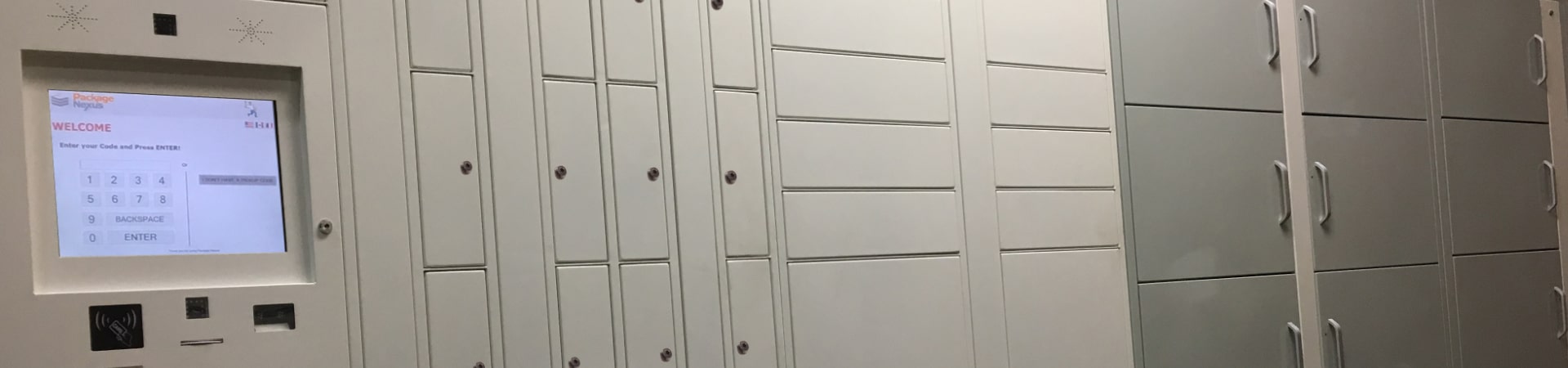

How to reduce lost or stolen packages in apartment buildings
To reduce lost or stolen packages in apartment buildings, replace unattended drop-offs with a controlled delivery and pickup process. Give carriers a secure destination, connect each parcel to the correct resident, restrict access, send pickup notifications, and maintain reliable records. Package Nexus adds patented On-Auto-Pilot technology to address common locker transaction errors automatically.
A missing package is not always a stolen package. A parcel may be at the wrong building, assigned to the wrong resident, placed on an unexpected shelf, or left inside a locker after an incomplete transaction. Effective prevention addresses both unauthorized access and the operational mistakes that make deliveries difficult to find.
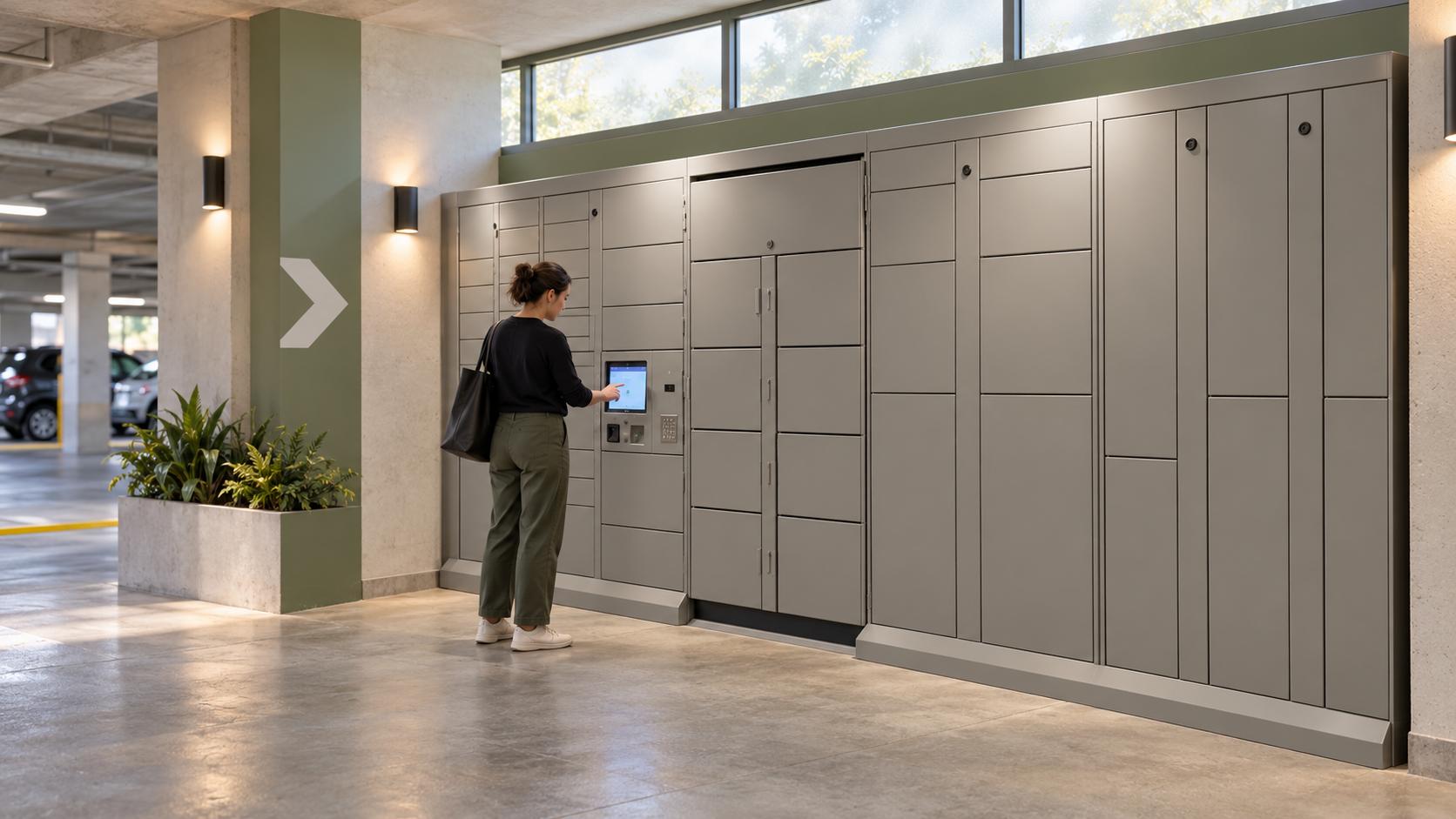
A secure destination with a reliable handoff
Package Nexus offers three ways to improve apartment package management: individually secured smart parcel lockers, a Standalone Package Room with organized shelf zones, and an Integrated Package Room that combines lockers and room storage under centralized control. The right choice depends on the building’s space, package mix, and need for individual compartment protection.
Seven practical ways to reduce package loss
- Find where deliveries become exposed or untraceable. Walk the actual carrier route, including secondary entrances, parking areas, stairwells, and the leasing office. Review recent missing-package reports by location and cause. Separate parcels left outside the system from parcels recorded inside it. This reveals whether the priority is access control, better delivery instructions, recipient data, storage capacity, or transaction accuracy.
- Move parcels into controlled storage. Provide a designated delivery point that residents and carriers can reach easily. Individual lockers restrict access to assigned compartments; an access-controlled room protects the storage area behind a managed entrance. A locked apartment entrance alone still leaves packages accessible to everyone already inside the building. Keep delivery doors closed and maintain working locks and door closers.
- Make correct delivery easier for every carrier. Post clear directions from the delivery entrance to the package system. Keep resident names, units, and contact information current, and demonstrate the workflow to drivers. Package Nexus supports all major delivery carriers and provides carrier training and delivery guidance to help properties establish consistent procedures. A carrier tracking update marked delivered is not, by itself, proof that a parcel entered the building’s locker or room workflow.
- Use pickup credentials that connect to a recorded delivery. Residents should receive clear pickup instructions and a unique credential associated with their delivery. Treat pickup codes like keys and avoid posting shared credentials in public areas. Prompt collection reduces storage pressure and the chance of confusion. Provide an accessible alternative for residents who need help using the kiosk or receiving notifications.
- Protect oversized parcels and holiday overflow. Even a strong locker installation loses its value for parcels left beside it. Define a secure destination for large cartons, bulky items, and peak-period overflow before the lockers fill. A package room can add flexible capacity, while a suitable mix of locker sizes keeps more everyday parcels individually secured. Maintain clear aisles and keep storage within the room’s planned capacity.
- Combine access records with useful camera coverage. Lighting and cameras can support deterrence and incident review. Position them to show relevant entrances and handoffs, and define who can review recordings and how long records are retained. Images of someone entering a room do not establish which parcel that person collected. Individual compartment records and package sensing provide different information from room-entry photos.
- Give residents a simple path to help. Publish one reporting process that asks for the tracking number, delivery time, resident name, and unit. Package Nexus offers 24/7 support availability, giving users a direct help route beyond office hours. Direct carrier misdeliveries to the carrier. Use smart locker support and operations to establish escalation responsibilities and review recurring causes so the same issue does not become a daily staff task.
How patented On-Auto-Pilot reduces avoidable troubleshooting
Package Nexus built its patented On-Auto-Pilot Smart Parcel Lockers to eliminate routine staff intervention in supported delivery and pickup errors. The system combines package sensing with software that checks what actually happened inside a compartment. It can complete or correct supported transactions when a user misses a step or a session times out, instead of leaving the property team to reconcile the record manually.
A workflow that depends on someone answering a confirmation question can record the wrong outcome when that answer is incorrect or omitted. Repeated mismatches can send residents and staff back to the kiosk, the carrier, or support. Patented On-Auto-Pilot technology addresses this problem at the transaction itself, reducing the need to investigate routine errors after the resident notices them.
| Common Transaction Problem | Package Nexus Response Described | Why It Matters |
|---|---|---|
| A delivery session times out | Sensors and workflow logic can complete a supported unfinished transaction. | Less manual searching for a parcel that was physically deposited. |
| A record does not reflect package presence | Package activity is checked through sensing, including small or flat items described in product materials. | Fewer misleading empty-compartment or unregistered-delivery situations. |
| Pickup is initiated but the parcel remains | The workflow uses sensed activity rather than assuming that code entry proves collection. | More dependable pickup status and compartment availability. |
The operational advantage is specific: fewer manual corrections for supported locker workflow errors, more dependable pickup information, and less interruption for leasing and management teams. Package sensing does not identify the contents of a shipping label or guarantee that a carrier chose the correct resident. Deliberate theft, physical damage, inaccurate account data, and deliveries outside the system still require appropriate action.
Hardware that supports package accountability
Package Nexus publishes an industrial hardware specification that includes heavy-duty 12-gauge galvanized steel construction, powder coating, a fanless industrial PC, and a 15-inch industrial touchscreen in applicable configurations. Its materials also identify electronic compartment locks, embedded cameras, a separate barcode reader such as the Honeywell 3320G, a physical Braille keypad, and compartment lighting.
These components serve different purposes. The cabinet and lock restrict physical access; the scanner and kiosk guide the transaction; sensors monitor package activity; and cameras provide visual context. Review the actual equipment schedule, dimensions, installation requirements, accessibility arrangement, and camera coverage for the selected configuration.
For a deeper look at the protection provided by cabinets, credentials, and activity records, explore electronic parcel locker security.
Standalone Package Room for organized secure storage
The Package Nexus Standalone Package Room converts suitable existing space into a computerized delivery destination. It is particularly useful when a property has a room available but lacks the layout or budget for a full locker bank. Its exterior access computer manages entry for both carriers and residents, leaving the interior available for package storage.
During delivery, the carrier selects a shelf zone and places the parcel in that area. The resident receives a unique pickup code and uses the recorded zone to locate the package. Clear zone labels reduce the need to search through an undifferentiated pile of boxes and make the room easier to use as delivery volume increases.
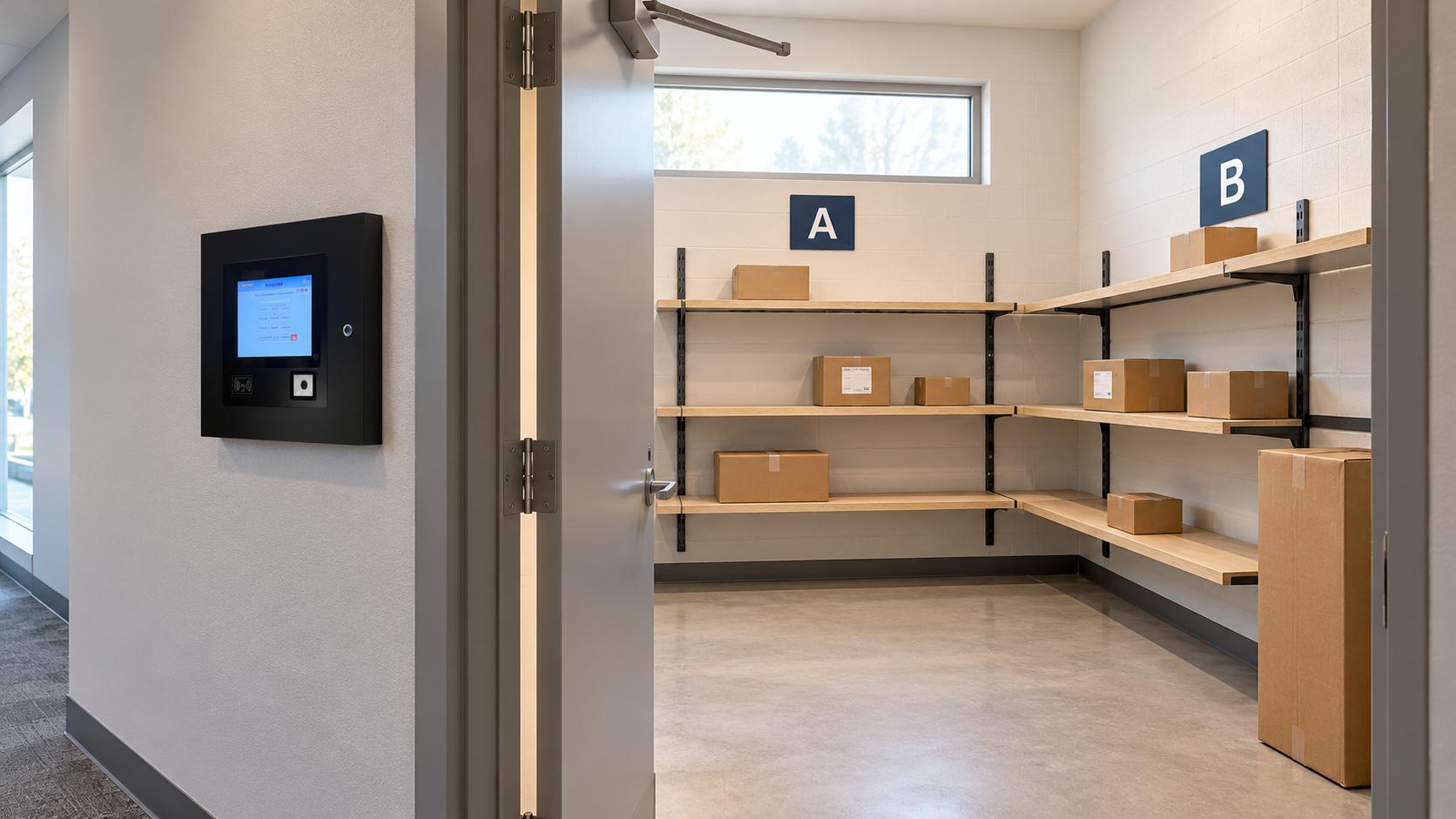
The exterior computer includes an embedded camera that captures a photo of the person entering. Optional interior cameras and large monitors can extend visibility within the room. The layout can include shelves for everyday parcels and a designated area for oversized deliveries, with clear circulation space for residents and carriers.
A room controls entry to a shared storage area. It does not separately lock every package away from other authorized room users. Properties that need individual parcel separation should consider lockers or a combined installation. Room suitability also depends on the door, available space, shelving, accessibility, and installation work; using an existing room can make efficient use of the budget, but project costs vary.
Integrated Package Room for a wider delivery mix
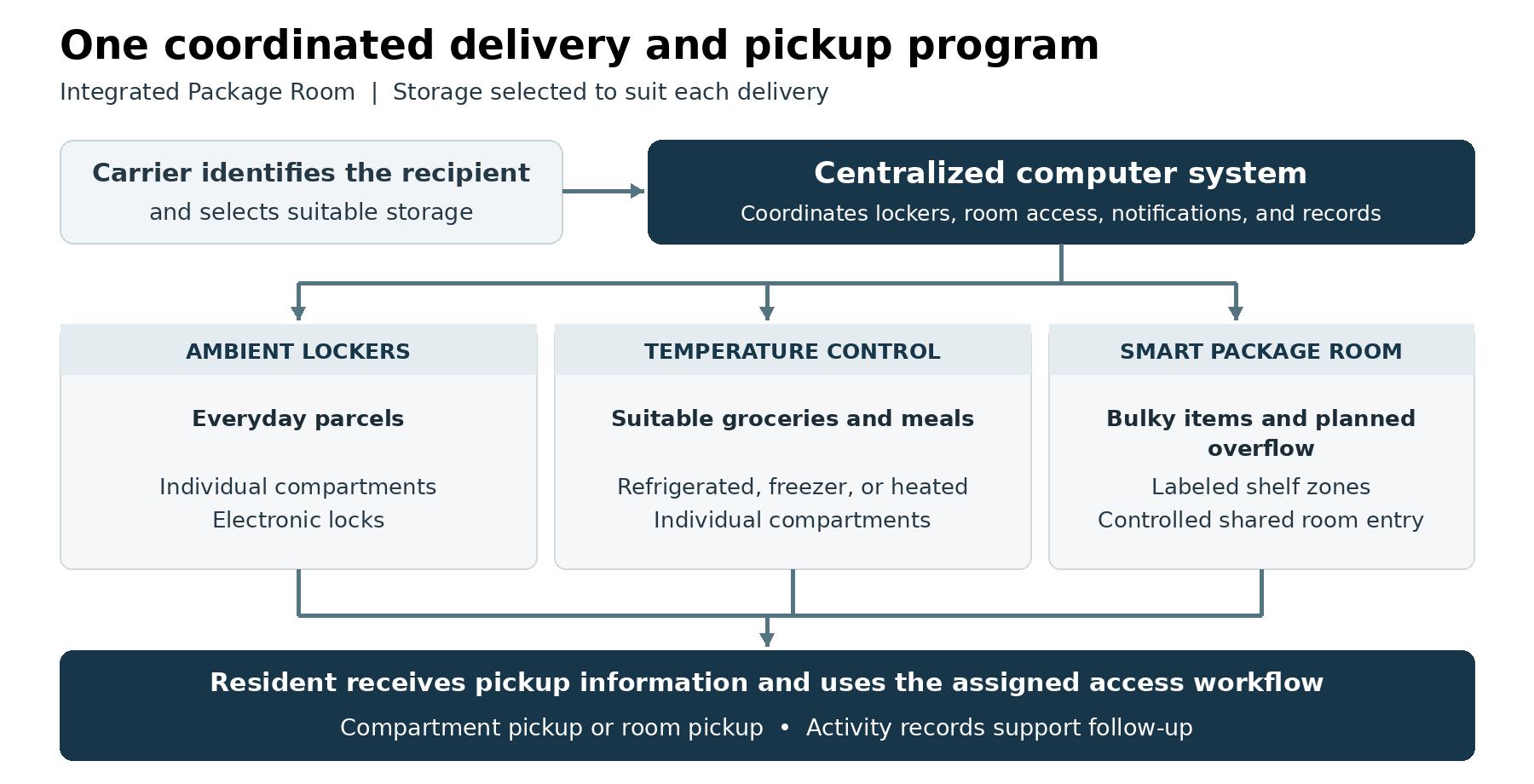
The Package Nexus Integrated Package Room brings ambient smart lockers, refrigerated smart lockers, other temperature-controlled lockers, and a Smart Package Room into one coordinated solution controlled and managed by a centralized computer system. A property can match storage to the delivery instead of forcing every item into the same type of compartment.
Ordinary parcels use ambient lockers. Appropriate grocery or meal deliveries can use specified refrigerated, freezer, or heated compartments. Bulky items and planned overflow use room storage. Temperature-controlled smart lockers add a separate capability from ambient storage; the selected equipment, settings, and collection procedures must match the intended deliveries.
| Configuration | Primary Storage Protection | Best Fit |
|---|---|---|
| Smart Parcel Lockers | Individually locked compartments with recipient pickup credentials. | Routine parcels where individual separation is a priority. |
| Standalone Package Room | Controlled entry to shared storage, organized by delivery zone. | Suitable existing rooms, varied parcel sizes, and constrained locker budgets. |
| Integrated Package Room | Individual ambient or temperature-controlled compartments plus controlled room access. | Mixed deliveries that need several storage types under centralized management. |
The integrated approach supports one organized package program across several storage needs. It can preserve individual compartment protection for routine parcels while giving oversized items a controlled destination. The room remains shared storage, so its access rules and camera coverage still matter.
Make the improvement worthwhile for residents and staff
Residents benefit when they know where a parcel is and can retrieve it without waiting for the leasing office. Property teams benefit when fewer deliveries need to be received, sorted, handed over, or investigated manually. Reliable package service can also strengthen the experience shown during a property tour and reduce the frustration that accompanies repeated missing-delivery complaints.
The strongest business case combines secure storage with less routine troubleshooting. Package Nexus automation is designed to keep supported user errors from becoming staff assignments, while the Standalone and Integrated Package Room options organize deliveries that need flexible space. Evaluate parcel lockers for apartments and condos against the building’s actual delivery patterns and the work the team wants to remove.
Size the system around packages awaiting collection
Unit count alone is an incomplete sizing method. Review daily and peak deliveries, package dimensions, pickup delays, multiple parcels for one resident, and seasonal surges. As an illustrative planning check, 60 incoming parcels a day with a 1.5-day average pickup delay means roughly 90 parcels may await collection. This is not a final compartment count: sizes, consolidation rules, accessible compartments, and overflow capacity change the design.
Consider indoor parcel lockers for a suitable interior delivery area and outdoor parcel lockers when the site layout calls for an exterior location. Confirm power, connectivity, mounting, clearances, and environmental suitability. Specify how deliveries, pickup, notifications, and records behave during an internet interruption; internet continuity and power backup are separate requirements.
Measure results using the same definitions
Track reported missing packages, confirmed thefts, deliveries left outside secure storage, staff minutes per 100 parcels, pickup delays, and unresolved exceptions. Compare similar periods and account for changing delivery volume. These measures show whether the installation is improving security and reducing work without relying on a promised percentage reduction.
When a package is reported missing
First compare the delivery address and carrier photo with the property location. Check whether the package appears in the locker or room record and whether its recipient or shelf zone is correct. Review authorized access and available images through the designated staff process. Preserve relevant details, contact the seller or carrier, and report suspected theft through the appropriate local channel. Avoid treating an unexplained tracking update as proof of theft.
To review a property-specific solution, request a Package Nexus consultation. Share the floor plan, package volume, size mix, current problem locations, and preferred pickup hours. Ask for a live demonstration of an interrupted delivery, an incomplete pickup, and the proposed overflow process so the operational benefits are visible before selection.
Frequently asked questions
What is the best way to reduce package theft in apartments
Start by removing unattended parcels from open lobbies, doorsteps, and hallways. Use individual smart lockers or an access-controlled package room, supported by clear carrier instructions, resident pickup credentials, and useful records. The best fit protects the deliveries a building actually receives, including oversized items and seasonal overflow. No arrangement can guarantee that every theft or delivery mistake will be prevented.
Are smart parcel lockers more secure than a shared package room
Individual lockers provide an additional separation layer because a resident’s pickup credential opens the assigned compartment rather than an entire room of parcels. A package room provides controlled entry and flexible storage, but authorized entrants can reach shared shelves. An integrated solution combines these approaches so ordinary parcels can remain individually secured while bulky items have a designated room location.
How does On-Auto-Pilot help when a package appears missing
Package Nexus On-Auto-Pilot uses sensors and automated workflows to address supported mismatches between physical locker activity and the transaction record. Examples include incomplete delivery sessions and pickup steps that were not completed correctly. More accurate status information reduces the need for routine manual reconciliation. A parcel delivered to the wrong address or never placed in the system still needs carrier or site follow-up.
Will property managers still need to troubleshoot package issues
For supported locker transaction errors, On-Auto-Pilot is designed to complete or correct the workflow automatically, removing the associated manual troubleshooting task. Property teams still oversee resident data, site access, maintenance, and unusual incidents. The intended benefit is that routine delivery and pickup mistakes no longer demand continual manager involvement; it is not a promise that a building will never need assistance.
How do residents find packages in the Standalone Package Room
The carrier selects a delivery zone through the computer outside the room and places the parcel in that zone. The resident receives a unique pickup code, enters through the controlled-access process, and goes to the recorded location. Matching physical shelf signs to the configured zones is essential. The room also needs a defined area and procedure for items that do not belong on ordinary shelving.
What does the Integrated Package Room include
The integrated solution can coordinate ambient smart lockers, refrigerated smart lockers, other temperature-controlled lockers, and a Smart Package Room through a centralized computer system. The configuration is selected for the property’s needs. This gives everyday parcels, appropriate perishable deliveries, and oversized items an organized path within one program, while preserving the distinct access protections of lockers and shared room storage.
Can a smaller building use a package room instead of lockers
Yes. A suitable existing room may be a practical starting point when a full locker bank does not fit the available layout or budget. The Standalone Package Room adds computerized access, delivery-zone selection, and unique resident pickup codes. Compare the total project cost, including door work, shelving, power, connectivity, and optional cameras, with a proposed locker configuration before choosing.
Do security cameras prevent all package theft
No. Cameras can discourage some behavior and provide useful context after an incident, but they do not physically prevent access to a parcel. Combine cameras with working doors, controlled credentials, appropriate storage, and a clear reporting process. For package rooms, entry photos establish who entered; additional coverage may be needed to understand activity near shelves.
Can residents pick up packages after the leasing office closes
Package Nexus smart lockers are designed for self-service pickup, and its package room workflow can let residents collect deliveries without a staffed handoff. Actual availability depends on the building’s access policy and where the system is installed. A kiosk inside a locked office cannot provide unrestricted after-hours access unless residents have an approved route to it.
What happens when the lockers are full or a parcel is too large
Use the property’s planned overflow or oversized-item procedure. A Package Nexus Package Room can provide a controlled location for deliveries that do not fit available compartments. Carriers should receive clear instructions for that situation instead of leaving parcels on the floor beside the lockers. Repeated overflow is a signal to review pickup delays, compartment sizes, or total storage capacity.
Does a package locker continue working during an internet outage
Package Nexus publishes a local-database capability that supports standalone locker operation during an internet interruption. Confirm the functions enabled in the quoted configuration, including use of existing pickup credentials, new deliveries, notification timing, and record synchronization. A local database does not supply electricity, so power resilience must be addressed separately in the installation plan.
How should residents respond when tracking says delivered but nothing is there
Check the delivery address, carrier photo, and building instructions first. Then use the property’s reporting process to check the locker or package room record and the assigned location. Contact the seller or carrier if the parcel cannot be located, and preserve the tracking details and relevant evidence. A delivery scan can indicate a misdelivery or timing issue; it does not automatically establish theft.

Package Nexus is the global technology leader and provider of The World's Most Advanced Smart Parcel Lockers for efficient and most simplified package management for multifamily communities, retailers, universities, libraries, corporate offices, groceries, and more. Package Nexus unique and patented technology offers a fix for human errors at the time of package deliveries and pickups. Package Nexus solutions help property, store, and office managers to improve their operations, reduce operating costs, and increase customer satisfaction at the same time. Package Nexus offers its entire suite of solutions globally.
USEFUL LINKS

© 2017-2026 Package Nexus