
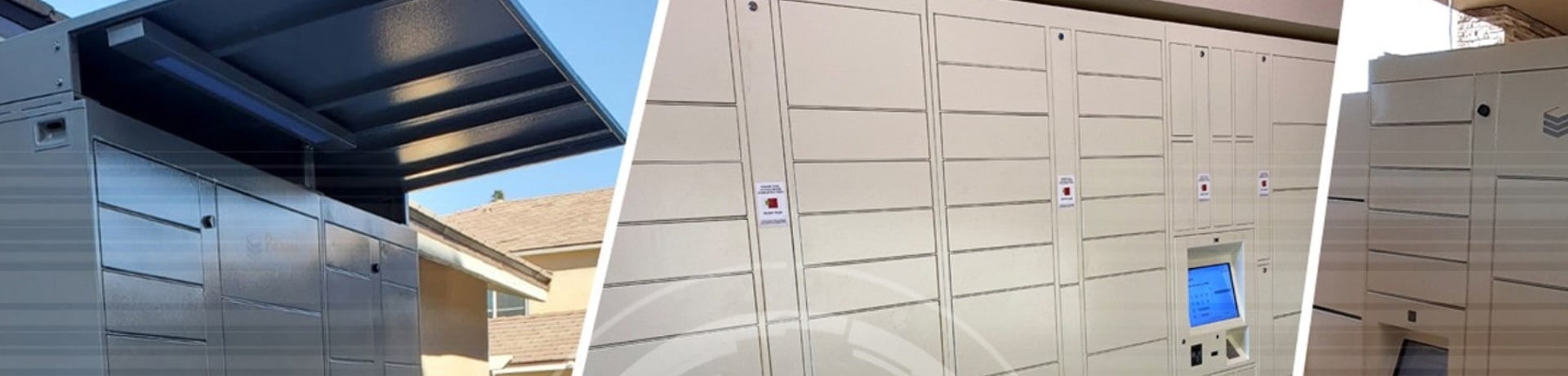

Smart Lockers vs Traditional Mailroom Package Storage
For multifamily communities, the key difference is how much of the delivery process depends on staff. Traditional mailroom storage gives a property a place to put packages, but it often leaves people to receive, organize, locate, and hand them out. Smart parcel lockers add recipient-specific compartments, electronic access, delivery records, and notifications so residents can collect packages themselves. The right choice depends on delivery volume, available space, package mix, staffing, and the experience a community wants to provide.
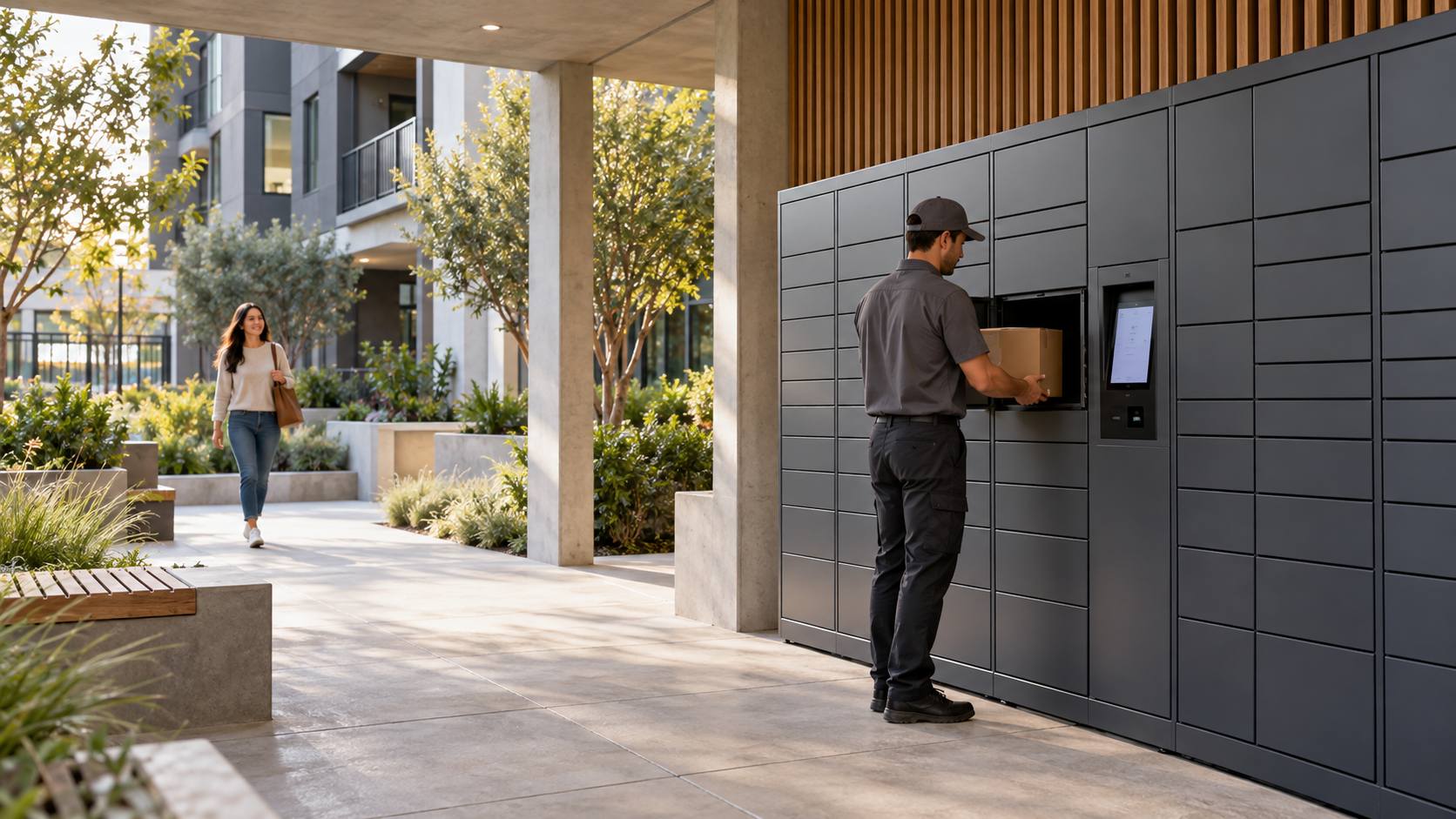
At a glance
Traditional mailroom storage is a staff-managed space or set of shelves where packages are received and held until residents retrieve them. A smart locker is an electronic package storage system that records deliveries, assigns parcels to secure compartments, and gives each recipient pickup instructions. Some properties combine the two: lockers handle everyday parcels, while a staffed or access-controlled package room accommodates oversized items and overflow.
| Decision Factor | Traditional Mailroom Storage | Smart Parcel Lockers |
|---|---|---|
| Delivery record | May rely on paper logs, labels, or staff memory. | Software can record delivery and pickup activity; sensors can help confirm package placement and removal. |
| Resident pickup | Often tied to office hours or staff availability unless residents have independent room access. | Self-service pickup can be available beyond office hours, subject to building access policies. |
| Staff workload | People receive, sort, label, answer inquiries, and locate packages. | Automated workflows can reduce routine handoffs and status checks; staff still support exceptions and site operations. |
| Access and accountability | Shared shelves or counters can make package ownership and access less clear. | Recipient-specific codes or barcodes and electronic activity records improve visibility. |
| Space and parcel mix | Shelves and rooms can take varied shapes, but need organization and enough floor area. | Compartment sizes are planned to fit the footprint; oversized items may need large compartments or a room workflow. |
| Scaling and peak periods | More volume can mean more sorting, overflow areas, and staff coordination. | Modular locker banks can be configured or expanded; hybrid storage can cover unusual sizes and peaks. |
| Best fit | Lower or manageable delivery volume, dependable staffing, and a preference for hands-on service. | Properties seeking consistent self-service pickup, clearer records, and less routine package handling. |
The distinction in one sentence: a traditional mailroom stores packages; a smart locker system also manages recipient access and package-status information.
How traditional mailroom package storage works
In a conventional process, a carrier leaves packages in a leasing office, mailroom, or designated storage area. Staff may sort items by resident or unit, record the delivery, and notify the recipient. The resident then visits during an available pickup period, identifies the package, and may sign or confirm receipt. Each step can be handled well, but the result depends on a repeatable process, enough storage, and staff availability.
When deliveries arrive throughout the day, package work can interrupt leasing, maintenance coordination, resident service, and other property duties. A package room can provide more space than a counter, yet shelves alone do not create a reliable record of who placed an item, where it was set down, or when it was collected. Properties can address these gaps with clear zones, access rules, logs, cameras, and assigned staffing, but those safeguards still require upkeep.
How a smart parcel locker changes the workflow
A multifamily smart locker system creates a dedicated delivery point with software-guided carrier and resident steps. A typical workflow is straightforward:
- Carrier selects the intended resident and places the parcel in an available compartment.
- The system records the transaction and associates the delivery with the recipient. Sensors can help confirm that a package was deposited or removed.
- The resident receives pickup instructions, commonly including a unique code or barcode.
- The resident uses the kiosk or configured access method to open the correct compartment and retrieve the package.
This moves routine package storage and retrieval toward self-service. Property staff can review package status and focus on exceptions instead of repeatedly checking shelves or answering whether a delivery has arrived. Building entry rules still matter: a locker does not provide access to a lobby or exterior area that the property otherwise keeps closed.
Where smart lockers make the biggest difference
Fewer routine package handoffs
When residents can collect deliveries directly, staff do not need to act as the go-between for every parcel. The amount of work reduced varies with delivery volume, resident adoption, operating procedures, and how many packages still require special handling. The practical goal is to shift repeatable steps to a consistent system while keeping staff available for the work that needs judgment.
More useful package-status information
Electronic records help answer basic operational questions: Was the package recorded? Which recipient is associated with it? Has it been retrieved? Package Nexus lockers use sensors and transaction tracking to support visibility into deposits, pickups, and stale packages. That record can make follow-up on a missing-package report more specific than relying on a handwritten note or recollection.
Convenient pickup beyond office hours
Residents often arrive home after the leasing office closes or leave before it opens. Smart lockers can support self-service pickup at times when staff are not available, as long as the resident can enter the relevant building or package area and the system is configured for that access policy.
A guided way to handle common delivery mistakes
Real deliveries do not always follow a perfect sequence. A driver may miss a registration step, a session may time out, a resident may reach an empty compartment, or a door may remain open. Package Nexus On-Auto-Pilot technology is designed to detect and help resolve common delivery and pickup workflow errors. The exact recovery action depends on the event and system configuration, but the objective is to reduce avoidable confusion and manual troubleshooting.
A traditional room and a smart locker can work together
The choice does not have to be all-or-nothing. Lockers are well suited to recipient-specific storage for parcels that fit the available compartments. A package room can provide additional space for unusually large deliveries, irregular items, or temporary overflow. A hybrid plan can route everyday deliveries through lockers and define a separate, visible process for parcels that do not fit.
For a property with heavy delivery peaks, the planning question is not only how many compartments are needed on an average day. Consider weekends, holidays, move-ins, promotions, grocery deliveries, and how long residents typically take to pick up packages. The room or overflow process should be intentional, with clear access, organization, and notification rules.
Package Nexus options for multifamily properties
Package Nexus offers configurable indoor and outdoor smart parcel lockers for apartment and condominium communities. An installation can be planned around the building footprint, access pattern, expected parcel sizes, resident count, and delivery volume. Indoor smart parcel lockers commonly fit a lobby or mailroom; outdoor smart parcel lockers can be considered for garden-style communities or locations where interior space is limited. Outdoor suitability depends on the proposed model and site conditions, so confirm environmental requirements during project planning.
Depending on the configuration, a Package Nexus system can include an industrial-grade computer, a high-resolution 15-inch or 22-inch touchscreen, barcode scanner, RFID reader, electronic locks, cameras, and package-presence sensors. The technology platform supports package tracking and recipient notifications, with connectivity and configuration reviewed for each installation. Package Nexus also supports Yardi resident-data exchange through SFTP; other integration requirements should be confirmed for the specific property and workflow.
Communities with routine grocery, meal, or other temperature-sensitive deliveries can evaluate temperature-controlled lockers. Larger compartments or a defined package-room workflow can address deliveries that exceed standard compartment dimensions. These are planning choices: the right configuration should reflect actual use, not simply a feature checklist.
How to decide which approach fits your property
Start with an operational snapshot rather than a general rule of thumb. Review the number of apartments, ordinary and peak delivery volume, package-size mix, existing staff time spent on packages, available floor or wall area, carrier access, resident access needs, and the building’s current package complaint patterns. Then compare options against these questions:
- How many deliveries arrive on a typical day and during the busiest periods?
- What share of parcels fit standard, large, or oversized compartments?
- Can carriers reach the proposed area without staff escort or interruption?
- What access hours should residents have, and how does that align with building security?
- Which resident records and property-management workflows must connect to the locker system?
- How will the property handle oversized packages, returns, refrigerated deliveries, and overflow?
- What package-status information will managers need when resolving a delivery question?
A site review can then map the physical layout, compartment mix, kiosk placement, connectivity, and day-to-day process. The strongest design is the one staff can support and residents can use consistently through both ordinary days and delivery surges.
Bottom line
Traditional mailroom storage can remain workable when package volume is manageable and staff have the time, space, and process to oversee it. Smart parcel lockers add electronic access, recipient-specific storage, notifications, and package activity records that can reduce routine handling and make pickup more flexible. For many multifamily properties, a smart locker installation with a defined package-room or overflow path offers a practical way to improve everyday package management without pretending every parcel is the same size.
Request a Package Nexus consultation to plan a system around your building, delivery patterns, and resident needs. Share your unit count, approximate package volume, floor plan, and indoor or outdoor requirements to discuss a configuration.
Frequently Asked Questions
What is the difference between a smart locker and traditional mailroom storage?
Traditional mailroom storage is a place where packages are held, often with staff organizing and handing them out. A smart parcel locker adds electronic compartments, a guided delivery workflow, recipient-specific pickup information, notifications, and package activity records. It is designed to let residents collect parcels themselves while giving property teams better visibility.
Are smart parcel lockers better than a staffed package room?
They solve different operational needs. Lockers are useful when a property wants compartment-based storage and self-service pickup. A staffed room can offer hands-on assistance and flexible storage for unusual items. A hybrid model can use lockers for everyday parcels and a room workflow for oversized packages or overflow. The best fit depends on delivery volume, staffing, space, and resident expectations.
Can residents pick up packages after the leasing office closes?
Self-service lockers can make pickup available outside leasing-office hours. Actual access depends on the building’s entry controls, the location of the locker area, and the system’s configured operating policy. Property teams should include access hours and security procedures in the site plan.
Do smart lockers eliminate package theft?
No storage system can guarantee that theft will never occur. Smart lockers place parcels in controlled compartments and provide recipient-specific access, while electronic records and cameras can support accountability. They can reduce exposure compared with packages left unattended in an open area, but building access, carrier practices, and site procedures remain important.
What happens when a package is too large for a locker compartment?
The property should plan for this before installation. Options can include larger compartments, an adjacent package room, or a defined overflow process. Package Nexus can help evaluate compartment sizes and storage workflow using the property’s parcel mix, floor plan, and peak-volume needs.
Can smart parcel lockers be installed outdoors?
Package Nexus offers indoor and outdoor locker configurations. Outdoor placement may help garden-style or low-rise properties with limited interior space. The project team should verify weather exposure, electrical and network access, accessibility, carrier approach, and the environmental specifications of the selected outdoor configuration.
Can smart lockers handle groceries or temperature-sensitive deliveries?
Temperature-controlled locker options can support suitable grocery, meal, or other temperature-sensitive deliveries. The property should define what it intends to store and confirm the compartment type, operating requirements, delivery process, and resident notification workflow.
Do smart lockers integrate with property-management software?
Integration needs vary by platform and by the resident information and workflows involved. Package Nexus supports Yardi resident-data exchange through SFTP, and other requirements can be reviewed for a project. Confirm the platform, data fields, update schedule, and implementation scope during planning.
How should a community size a smart locker system?
Use unit count as a starting point, then review actual package volume, package dimensions, pickup timing, seasonal peaks, available space, and any refrigerated or oversized needs. A site assessment helps balance compartment capacity with circulation, accessibility, carrier workflow, and an overflow plan.
Can smart lockers reduce work for apartment staff?
They can reduce routine receiving, sorting, resident handoffs, and package-status checks by moving common steps into a self-service workflow. The actual time impact depends on volume, resident adoption, parcel exceptions, and current staffing procedures. Staff remain important for site oversight and issues that need personal assistance.

Package Nexus is the global technology leader and provider of The World's Most Advanced Smart Parcel Lockers for efficient and most simplified package management for multifamily communities, retailers, universities, libraries, corporate offices, groceries, and more. Package Nexus unique and patented technology offers a fix for human errors at the time of package deliveries and pickups. Package Nexus solutions help property, store, and office managers to improve their operations, reduce operating costs, and increase customer satisfaction at the same time. Package Nexus offers its entire suite of solutions globally.
USEFUL LINKS

© 2017-2026 Package Nexus