
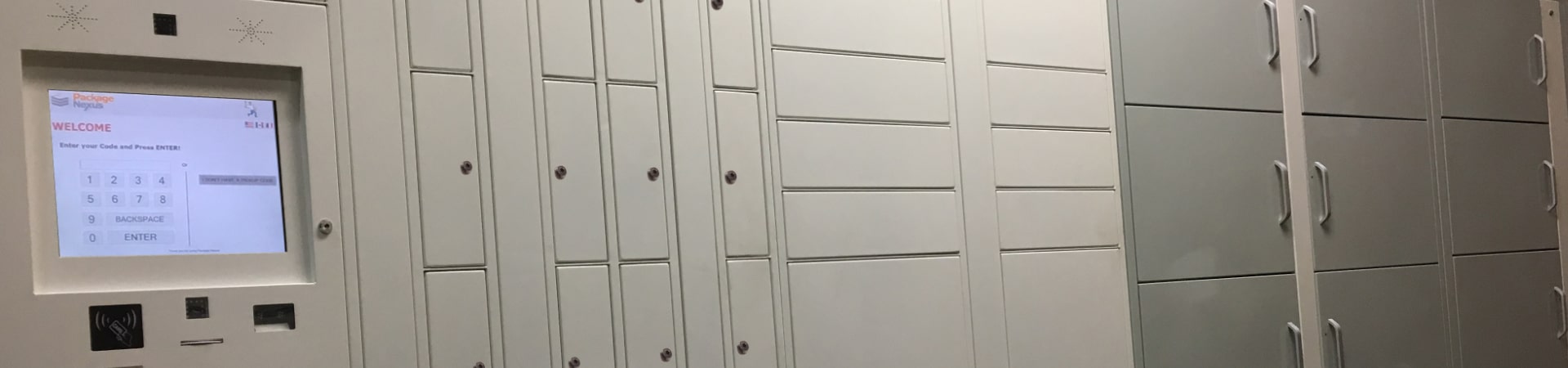

Are there Differences Between Smart Parcel Lockers and Electronic Parcel Lockers?
Security automation and operating value for property owners and managers
Electronic parcel lockers control access through an electronic lock. Smart parcel lockers add software that coordinates delivery, recipient notifications, pickup credentials, records, and management. The most useful distinction is what the system can verify and complete automatically when a courier or recipient makes a mistake.
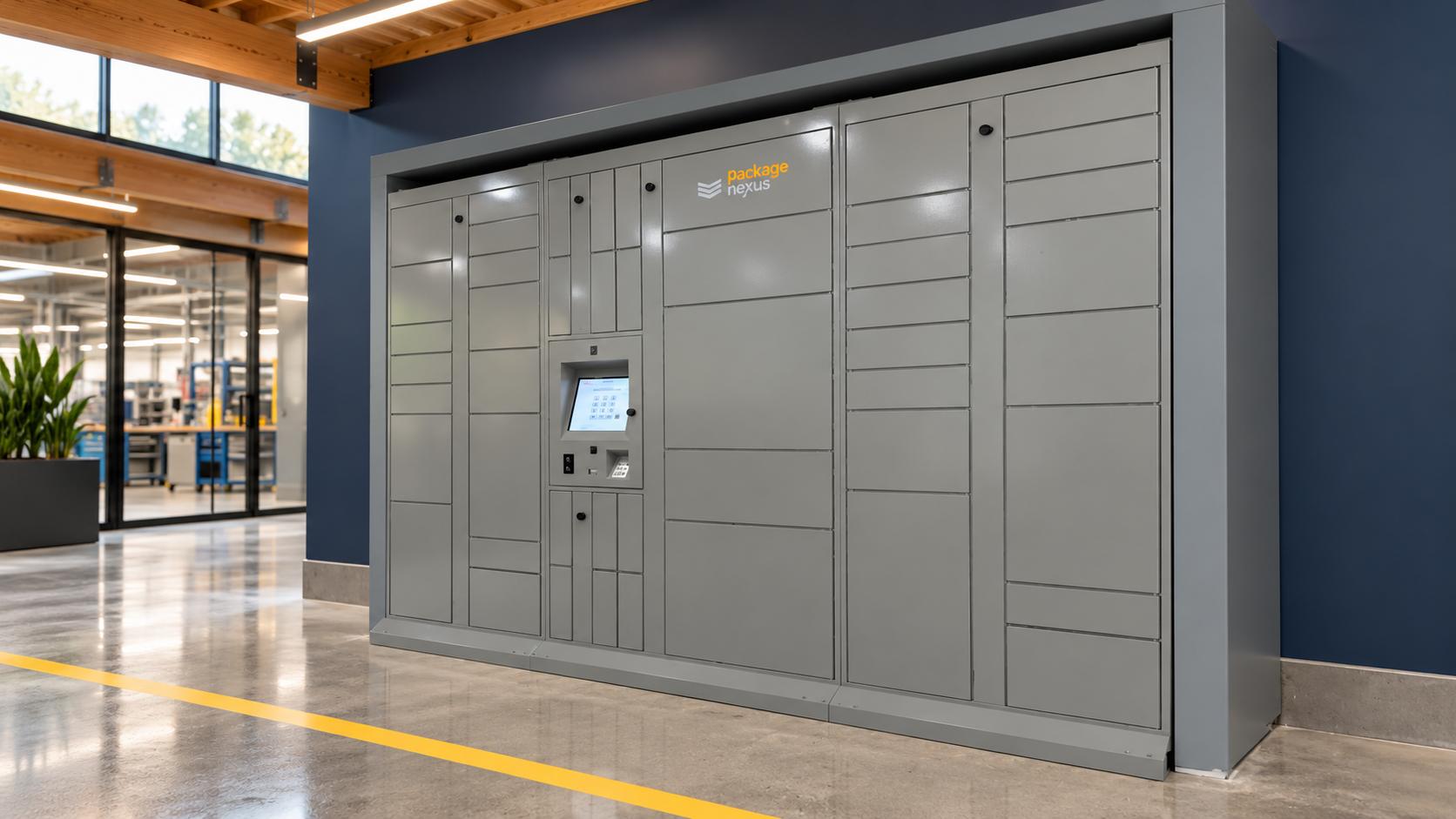
For property managers, a keypad or touchscreen is only the beginning. A strong package management solution must protect the parcel, maintain an accurate record of its location, and reduce the interruptions that pull staff away from residents and property operations. Package Nexus combines heavy-duty construction with patented On-Auto-Pilot workflows, modular expansion, and a choice of lockers or package rooms.
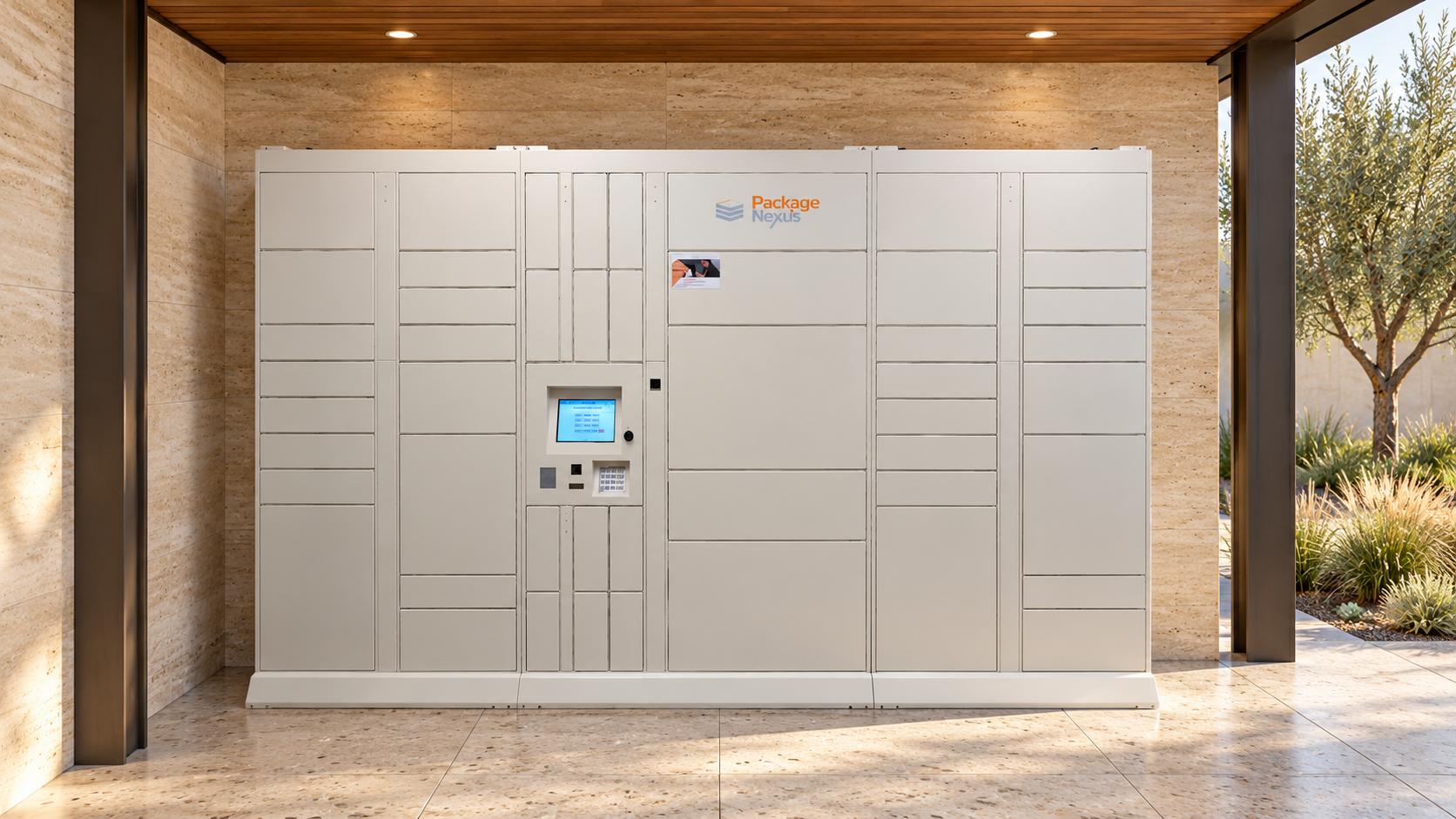
What the terms actually mean
A parcel locker is a secure compartment for a package. Electronic describes how access is controlled. Smart describes additional software and workflow capabilities. A smart locker normally includes electronic locking hardware, so the categories overlap. Suppliers sometimes use electronic, automated, digital, and smart parcel lockers to describe the same product.
This article uses basic electronic locker to mean electronic access with limited workflow automation. It does not assume that every product marketed as electronic lacks notifications, sensors, or integrations. Compare the actual specification and a live demonstration, especially the steps that occur after a user stops responding.
| Capability | Basic Electronic Parcel Locker | Connected Smart Parcel Locker |
|---|---|---|
| Primary function | Controls a compartment with an electronic lock. | Coordinates storage, access, delivery, pickup, and records. |
| User credentials | May use a keypad, PIN, card, or locally assigned code. | Typically links recipient-specific credentials to a package transaction. |
| Notifications | May be manual, local, or limited, depending on the product. | Usually automates email, text, or app notifications. |
| Management | May require staff to assign access and reconcile activity. | Can provide dashboards, activity logs, and remote administration. |
| System integration | Varies; simpler products may operate independently. | May connect to property, campus, retail, or access systems. |
| Package verification | An electronic lock alone cannot verify package presence. | Sensors and confirmation logic vary; the smart label is not proof. |
| Exception handling | Staff or users may need to correct incomplete records. | Capabilities range from alerts to automatic correction of supported errors. |
| Growth and cost | Can suit simple, low-volume needs; assess ongoing staff work. | Can support broader workflows and expansion; compare total operating cost. |
Why physical package verification matters
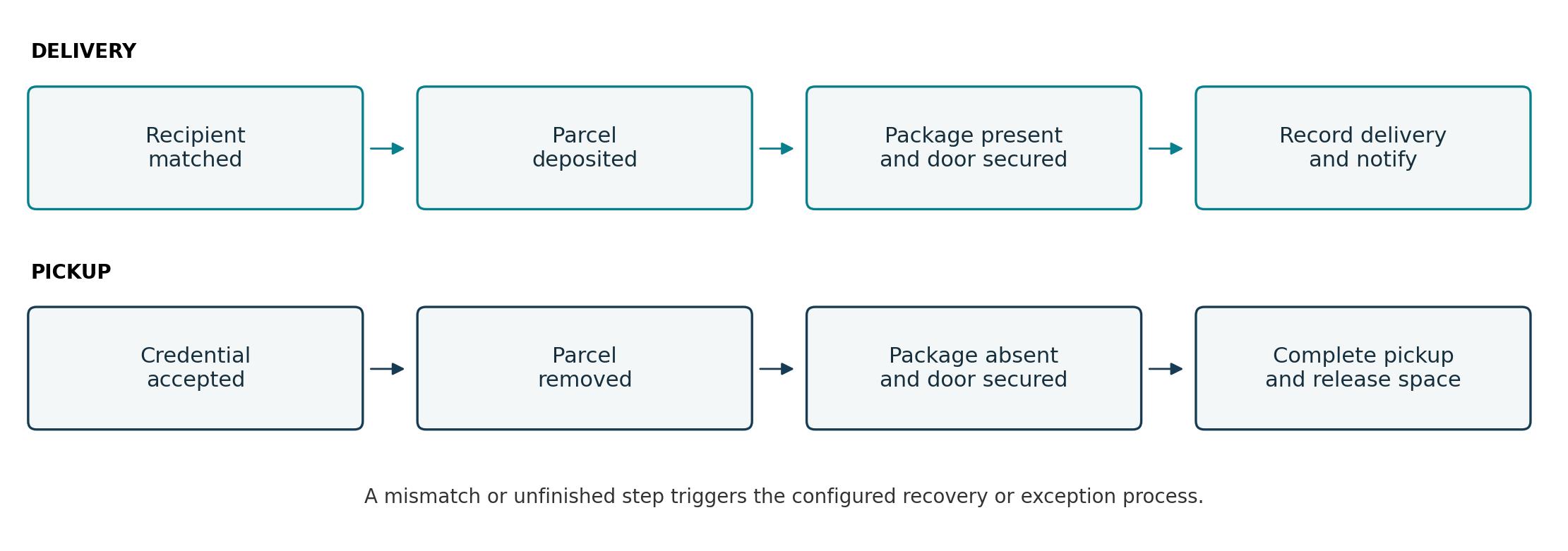
A valid pickup code proves that the system issued a credential. An open door proves that access occurred. A closed door proves that the door changed state. None of these events, by itself, establishes whether a package was deposited or removed.
A delivery record becomes more dependable when it combines the intended recipient, the selected compartment, physical package detection, door status, and time-stamped transaction events. Pickup logic should similarly distinguish a door opening from actual removal. This is the practical difference between recording a user response and verifying the event that response is supposed to describe.
A sensing system must be evaluated with the property’s real package mix. A bulky carton, padded envelope, thin flat mailer, and small irregular item should all be included. Detection should work throughout the supported storage area and should be demonstrated with different placements and orientations. Presence detection still needs the correct recipient association; it does not independently read a shipping label or establish ownership.
The cost of incorrect or missing confirmations
Package Nexus estimates that user inputs can be incorrect or missing in 10–20% of interactions in workflows that depend on manual confirmation. This is a company-provided estimate, not a measured error rate for every property or locker vendor. It describes unreliable inputs, which should not be equated automatically with lost packages or service incidents.
The operational concern is straightforward. A courier may deposit a parcel but leave before confirming. A recipient may open a compartment, leave the item inside, and accidentally report a completed pickup. A session may time out after the physical action has already occurred. If the database follows the answer rather than the package state, staff can inherit a mismatch that requires investigation.
For illustration, if 100 transactions each required one confirmation and 10–20% of those confirmations were wrong or absent, the workflow would receive 10–20 unreliable confirmations. That is a planning scenario, not an observed Package Nexus result. The buying question is how many of those situations the system detects and corrects before they reach the site team.
How Package Nexus On Auto Pilot addresses these problems?
Package Nexus describes itself as the only smart parcel locker provider offering its worldwide-patented On-Auto-Pilot technology to sense package presence or absence and automatically resolve supported delivery and pickup errors. Its published materials describe detection of large, medium, small, and thin or flat packages, with software that uses the physical state rather than depending on a final yes-or-no answer.
The company reports patent protection in the United States and Australia and in 18 European countries. Its worldwide-patented description refers to that international patent portfolio. The practical benefit for a buyer is the combination of sensing and recovery logic; the exclusivity statement is Package Nexus’s description of its proprietary system, rather than a claim that no other locker offers any form of package sensing.
With patented On-Auto-Pilot smart locker technology, supported incomplete or timed-out delivery and pickup transactions can be completed through the system’s configured logic. When the platform resolves an exception automatically, the manager no longer needs to troubleshoot that transaction. This removes routine sources of package work rather than simply creating another alert for the leasing office.
Properties should see demonstrations of a deposited package with no final confirmation, an opened compartment where the package remains inside, a small flat parcel, and a timed-out transaction. Also review the response to a door left open. Software can detect or manage an open-door exception, but it should not be assumed to physically close a door unless the selected hardware provides that function.
The objective is to eliminate continuous staff involvement in supported routine package issues. Hardware damage, incorrect resident data, carrier misaddressing, site access problems, and unusual exceptions still need a defined service process. Systems that rely on manual answers without effective recovery can turn repeated input errors into repeated staff tasks; the frequency depends on the actual installation and workflow.
Why 12 gauge steel deserves attention?
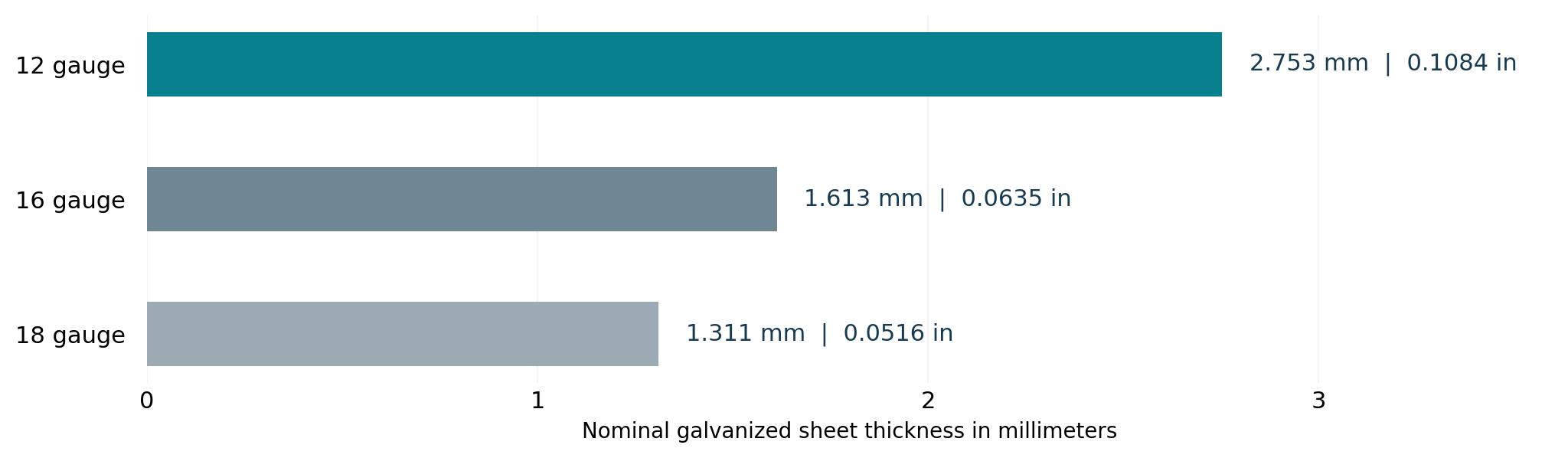
Steel gauge works in reverse: a lower gauge number indicates thicker sheet within the same gauge convention and material. Package Nexus specifies heavy-duty 12-gauge steel and describes galvanized steel with an industrial powder-coated finish in its comparison materials. When a proposal uses 16- or 18-gauge sheet, the difference in material thickness is substantial.
For nominal galvanized sheet, 12 gauge is approximately 0.1084 inch or 2.753 mm thick, compared with 0.0635 inch or 1.613 mm for 16 gauge and 0.0516 inch or 1.311 mm for 18 gauge. On that basis, 12 gauge is about 71% thicker than 16 gauge and 110% thicker than 18 gauge. These are thickness comparisons, not measured percentages of theft resistance.
For the same steel grade and panel geometry, thicker sheet generally provides greater resistance to local bending and deformation. In a frequently used parcel locker, that can help resist everyday impacts, reduce panel flex, and support consistent door and lock alignment. It also places more material between an attempted forced entry and the stored package. These are meaningful advantages in busy residential, retail, campus, and workplace settings.
Durable panels can help limit cosmetic damage and avoid repairs associated with bent components. Galvanizing adds a zinc layer for corrosion protection, while a suitable powder coating provides a protective finish. Those benefits depend on coating quality, exposed edges, installation conditions, and maintenance; a heavier gauge alone does not establish an outdoor weather rating.
Heavier construction also means more weight and potentially higher transport and installation costs. The complete enclosure matters: compare doors, frame, hinges, latch engagement, reinforcement, anchoring, and tested performance. A reinforced thinner assembly may behave differently from an unreinforced sheet. Ask for thickness in millimeters or inches for each critical component, because mild-steel and galvanized-steel gauge tables differ. A steel gauge alone is not a burglary certification.
Hardware and software should support the same goal
Package Nexus pairs its package workflow with industrial-grade computing and dedicated user-interface components. Its published configurations include a fanless industrial PC, a 15-inch touchscreen, a dedicated industrial 1D/2D barcode reader, cameras, electronic locks, package sensors, a separate Braille keypad, audio prompts, and compartment lighting. Its comparison material identifies the Honeywell 3320G scanner among the hardware used.
The value of these components is practical: a clear interface helps carriers complete deliveries, a dedicated scanner supports parcel identification, and sensor feedback supports accurate transaction status. Accessible controls and a suitable compartment layout improve usability. Confirm the current bill of materials, accessible reach ranges, installation layout, connectivity, and included service terms for the exact configuration.
| System Element | Published Package Nexus Capability | Buying Consideration |
|---|---|---|
| Enclosure | 12-gauge steel; galvanized steel and powder-coated construction described. | Specify panel and door thickness, finish, reinforcement, and anchoring. |
| Computing and interface | Fanless industrial PC; 15-inch touchscreen; separate barcode reader. | Confirm current components and indoor or outdoor suitability. |
| Verification | Package sensing plus delivery and pickup transaction logic. | Demonstrate flats, small parcels, interrupted sessions, and retained parcels. |
| User access | Recipient pickup credentials; electronic locks; notifications. | Confirm notification channels, credential lifecycle, and resident-data workflow. |
| Usability and visibility | Braille keypad, audio prompts, cameras, and compartment lighting in published configurations. | Confirm included equipment, accessible layout, and record retention. |
| Storage choices | Ambient, refrigerated, freezer, heated, and package room options. | Match each module to item size, use, location, and operating requirements. |
Explore Package Nexus indoor parcel lockers for interior locations and Package Nexus outdoor parcel lockers for exterior projects. An outdoor placement requires the appropriate enclosure, display, coating, electrical installation, and environmental specification, even when the site has a canopy.
Choose lockers a package room or an integrated solution
The strongest package management plan accounts for every major delivery type. Individual compartments suit items that fit the selected size mix and benefit from separation. A package room provides flexible space for oversized cartons and peak-period overflow. A combined configuration can cover both needs.
Integrated Package Nexus Package Room
The Integrated Package Nexus Package Room combines ambient smart lockers, refrigerated smart lockers, other temperature-controlled smart lockers, and a Smart Package Room under a centralized computer system. This allows a property to plan standard parcels, appropriate temperature-sensitive deliveries, and oversized items as parts of one coordinated operation.
The integrated arrangement is useful when a community receives a varied package mix or wants a single management approach across several storage formats. Review how recipients, notifications, access events, and administrative records are coordinated across each component. Refrigerated or heated storage must be specified for the intended use; ordinary ambient lockers do not provide controlled-temperature holding.
Package Nexus temperature-controlled smart lockers offer refrigerated, freezer, and heated options. The selected equipment, temperature settings, packaging, operating procedures, and pickup window must match the items being held.
Standalone Package Nexus Smart Package Room
The Standalone Package Nexus Smart Package Room offers computerized, access-controlled package handling for properties with a suitable room but limited space or budget for a locker bank. An exterior computer manages entry. During delivery, the carrier selects a shelf-zone and places the package in the corresponding labeled area. Residents receive a unique pickup code and can go to the recorded zone to locate their delivery.
This creates an orderly process for packages that might otherwise accumulate in an office or open storage area. The exterior computer includes an embedded camera for entry photo capture; optional interior cameras and large monitors can extend visibility. Clear zone labels, sensible shelving, and a defined oversized-item area help residents find packages without a staff escort.
A controlled room and an individually locked compartment offer different forms of protection. A room credential controls entry to a shared space; it does not individually lock every parcel. Shelf-zone selection and entry photos should also be distinguished from package sensing inside a locker compartment. Specify the verification method for each part of the proposed solution.
Expand as the community grows
Package Nexus lockers are 100% modular and can be expanded as the community or package volume grows. Owners can plan an initial configuration around current demand, reserve space for additional towers, and add compatible modules as needs change. Expansion should account for available floor area, power, connectivity, accessibility, and the supported system configuration.
Capacity planning should consider daily arrivals, the busiest periods, how long packages remain before pickup, and the distribution of parcel sizes. Accurate occupancy status helps protect usable capacity: a physically empty compartment should not remain unavailable because a resident missed a confirmation, and an occupied compartment should not be treated as free.
US ownership and a clear service relationship
Package Nexus is 100% US owned and operated. For buyers who prefer a domestic ownership and operating relationship, this adds a useful procurement consideration alongside product performance, support availability, and contract terms. Ownership can matter when deciding who is accountable for product decisions, escalation, and the long-term service relationship.
US ownership should be evaluated separately from manufacturing origin, component sourcing, and data-hosting location. Discuss those requirements directly when they matter to a project. Learn more about Package Nexus and its approach to package management.
Where advanced automation creates value
Smart parcel lockers for apartments and condos can give residents self-service pickup while reducing package-related interruptions at the leasing office. Student housing can use the same principle to manage changing resident populations and concentrated delivery periods. Hotels can provide an organized collection point under the property’s guest verification and storage policies.
Retailers can use a defined locker workflow for order pickup and supported returns. Libraries can connect locker pickup to their circulation procedures where the required integration is available. Corporate mailrooms and campuses can use lockers for employee parcels and authorized internal handoffs, while warehouses can apply configured workflows to equipment or supply distribution. Each use case needs its own recipient data, access rules, and exception process.
Compare the work left for staff
A useful purchasing comparison measures more than the number of doors or the lowest initial price. Ask each provider to show what the system does when a delivery is incomplete, a pickup is interrupted, a notification conflicts with physical occupancy, or a package remains in place after access.
Track staff minutes per delivery, manual corrections per 100 transactions, average pickup time, avoidable compartment downtime, and the reasons for support requests. These measures reveal whether automation is reducing work or simply moving it to a dashboard. Review smart locker support and operations alongside the hardware proposal.
For a simple planning example, saving 30 staff minutes per day at an illustrative loaded labor cost of $30 per hour represents $5,475 of annual staff capacity over 365 days. It becomes a cash saving only if paid labor, overtime, or another actual expense falls. Deduct software, connectivity, maintenance, financing, and other recurring costs, and include installation when evaluating payback.
Consider the full installed system, software and service fees, future expansion, and the expected replacement cycle. A durable enclosure and reliable automated recovery can be valuable even when a cheaper system offers the same nominal compartment count.
What to request in a live demonstration
Ask the provider to deposit and remove a small flat mailer, a padded envelope, and a larger carton in different supported positions. Watch the occupancy record, resident notification, and pickup credential change as the physical state changes.
Then ask the demonstrator to omit a confirmation, leave a transaction unfinished, open a compartment without collecting the parcel, and show the documented response to a door left open. Confirm which events resolve automatically, which require user action, and which reach support. For a package room, separately demonstrate exterior entry, shelf-zone selection, resident guidance, and the available camera records.
Finally, review power or network interruption behavior, carrier entry, resident-data updates, privacy settings, service escalation, and future expansion. Use the same scenarios for each proposal so the comparison reflects observable behavior.
Plan the right Package Nexus solution
The best choice is the system that combines secure construction with a dependable delivery and pickup process. Package Nexus brings together 12-gauge steel, patented sensing and On-Auto-Pilot recovery, modular growth, and standalone or integrated package room options to reduce routine package work and improve the pickup experience.
Request a Package Nexus demonstration to compare the workflow with your property’s actual package mix. Share your floor plan, current and peak delivery volume, typical pickup delay, and oversized or temperature-sensitive storage needs. Package Nexus can help develop a configuration that supports residents and releases staff time for the property.
Frequently asked questions
Are smart parcel lockers and electronic parcel lockers the same
The terms overlap. A smart parcel locker normally uses electronic locks, but adds software to manage delivery, access, notifications, and records. A basic electronic locker may provide digital access without that broader automation. Because vendors use the labels differently, compare the exact workflow, integrations, sensing, and exception-handling features.
Does a touchscreen make a locker smart
A touchscreen is an interface. It does not establish whether the system verifies a deposit, tracks package removal, or recovers from an incomplete transaction. Ask what happens behind the screen: how the parcel is linked to a recipient, what triggers the notification, and what evidence closes the pickup record.
Why is package sensing more useful than asking whether delivery is complete
Sensing provides evidence about the physical contents of the compartment. A person can forget a final confirmation or select the wrong answer. Combining package detection with the correct recipient association, door state, and transaction logic helps the system keep physical storage and digital records aligned.
Can small flat or irregular packages be detected
Package Nexus states that its patented sensing technology covers large, medium, small, and thin or flat packages. A buyer should demonstrate the smallest and most awkward items expected at the site, in different supported positions. Confirm the operating limits and the response when a reading is uncertain; package shape should be tested rather than assumed irrelevant.
What does the 10 to 20 percent input error figure mean
It is Package Nexus’s estimate of incorrect or missing user inputs in workflows dependent on manual confirmation. It is not an independently established rate for all lockers, and it is not a claim that 10–20% of parcels are lost. Its purpose is to explain why physical verification and recovery logic matter.
Why choose 12 gauge steel over 16 or 18 gauge
Within a given steel gauge convention, 12 gauge is thicker. Using nominal galvanized-sheet values, it is about 71% thicker than 16 gauge and 110% thicker than 18 gauge. That provides a material advantage for resisting panel deformation under comparable conditions. Evaluate hinges, latches, reinforcement, coatings, anchoring, and the complete enclosure as well.
Does 12 gauge steel make a parcel locker theft proof
No physical storage system should be described as theft proof based on sheet thickness alone. Security depends on the complete cabinet, locking hardware, installation, access credentials, and operating procedures. Heavy-duty steel is an important layer of protection, supported by controlled access and useful delivery and pickup records.
Will On Auto Pilot eliminate package troubleshooting for site managers
For supported routine errors that the system detects and resolves automatically, it removes the need for the site manager to troubleshoot that transaction. Package Nexus designs On-Auto-Pilot around that goal. Properties still need procedures for damage, incorrect recipient information, unusual deliveries, and other events outside the automated workflow.
Is a standalone package room a good option for a limited budget
It can be, especially when the property already has a suitable secure room. Package Nexus adds computerized entry, carrier-selected shelf-zones, unique resident pickup codes, and entry photo capture. Compare the room conversion and operating costs with a locker bank, and account for the shared-space access model and the quality of the shelving layout.
How is an integrated package room different
An integrated configuration brings ambient, refrigerated, and other temperature-controlled lockers together with a Smart Package Room under a centralized computer system. It suits properties with mixed delivery needs. Confirm how the room and locker records work together, and which security and verification features apply to each storage area.
Can Package Nexus lockers be expanded later
Yes. Package Nexus describes its lockers as 100% modular and expandable as package volume or the community grows. Reserve suitable space and review electrical capacity, connectivity, accessible circulation, and module compatibility during initial planning. The right compartment mix matters as much as the total number of doors.
Can residents collect packages after office hours
Self-service pickup can support access beyond leasing-office or mailroom hours. Actual availability depends on building entry, locker or room placement, and property access policies. A locker inside a room that closes at night cannot provide unrestricted overnight access unless the building’s access plan allows it.
Can the same system handle groceries and oversized deliveries
A suitable configuration can combine temperature-controlled lockers with a package room or larger compartments. Match refrigerated, freezer, or heated equipment to the intended items and operating procedures. A room can accommodate parcels that do not fit the selected compartments, provided the entry route, shelving, and clear circulation space are adequate.
Is Package Nexus a US owned company
Yes. Package Nexus is 100% US owned and operated. Buyers can consider that ownership relationship alongside technology, support, and lifecycle cost. Manufacturing location, component origin, and data hosting are separate procurement questions and should be addressed specifically when required.

Package Nexus is the global technology leader and provider of The World's Most Advanced Smart Parcel Lockers for efficient and most simplified package management for multifamily communities, retailers, universities, libraries, corporate offices, groceries, and more. Package Nexus unique and patented technology offers a fix for human errors at the time of package deliveries and pickups. Package Nexus solutions help property, store, and office managers to improve their operations, reduce operating costs, and increase customer satisfaction at the same time. Package Nexus offers its entire suite of solutions globally.
USEFUL LINKS

© 2017-2026 Package Nexus