


Why would a person want to use a smart locker?
A person would use a smart locker to receive packages securely, collect them on a convenient schedule, and avoid waiting at home or at a service desk. The most useful systems also verify that a parcel was actually deposited or removed, so delivery alerts and pickup records reflect what happened inside the compartment.
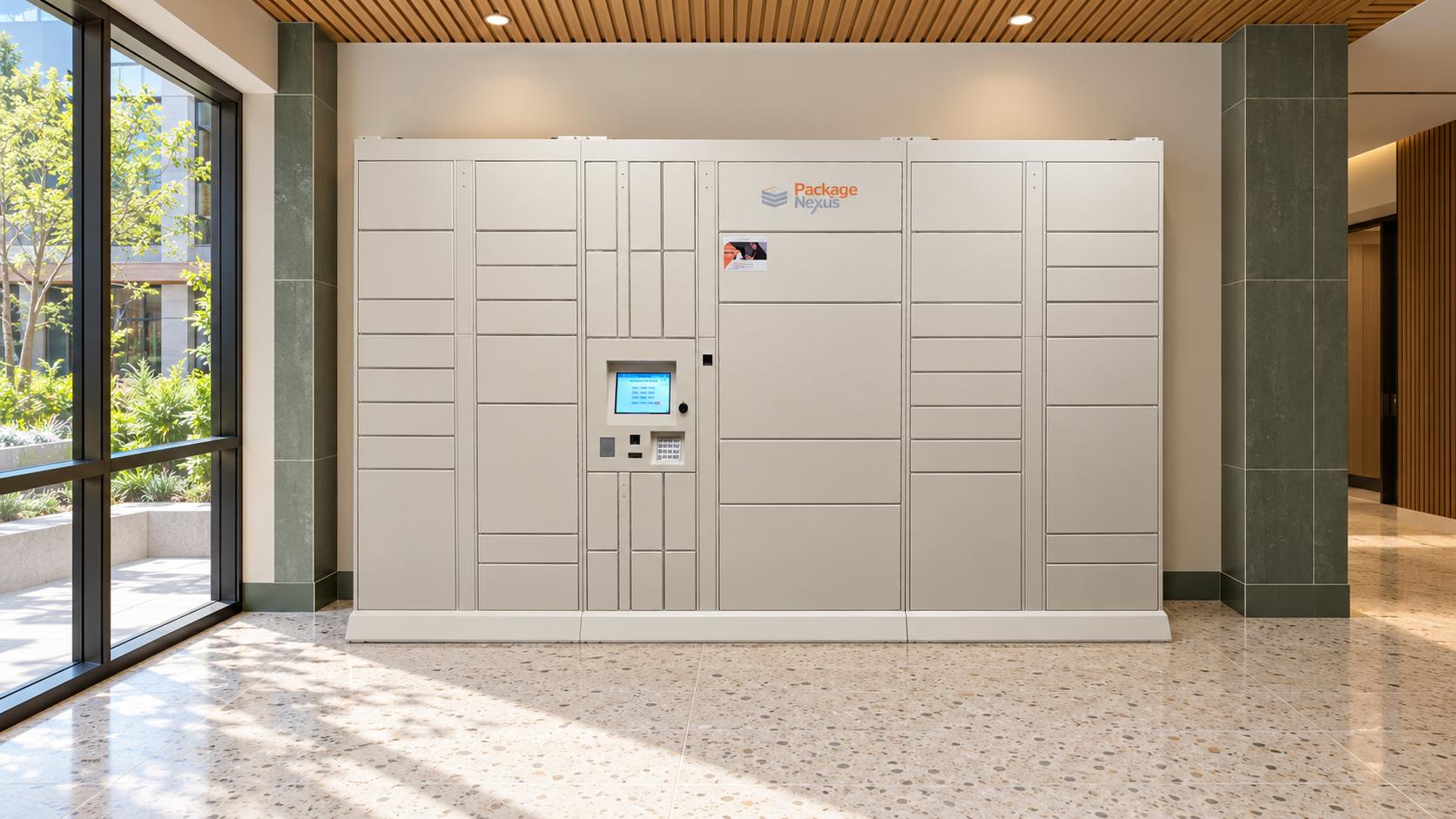
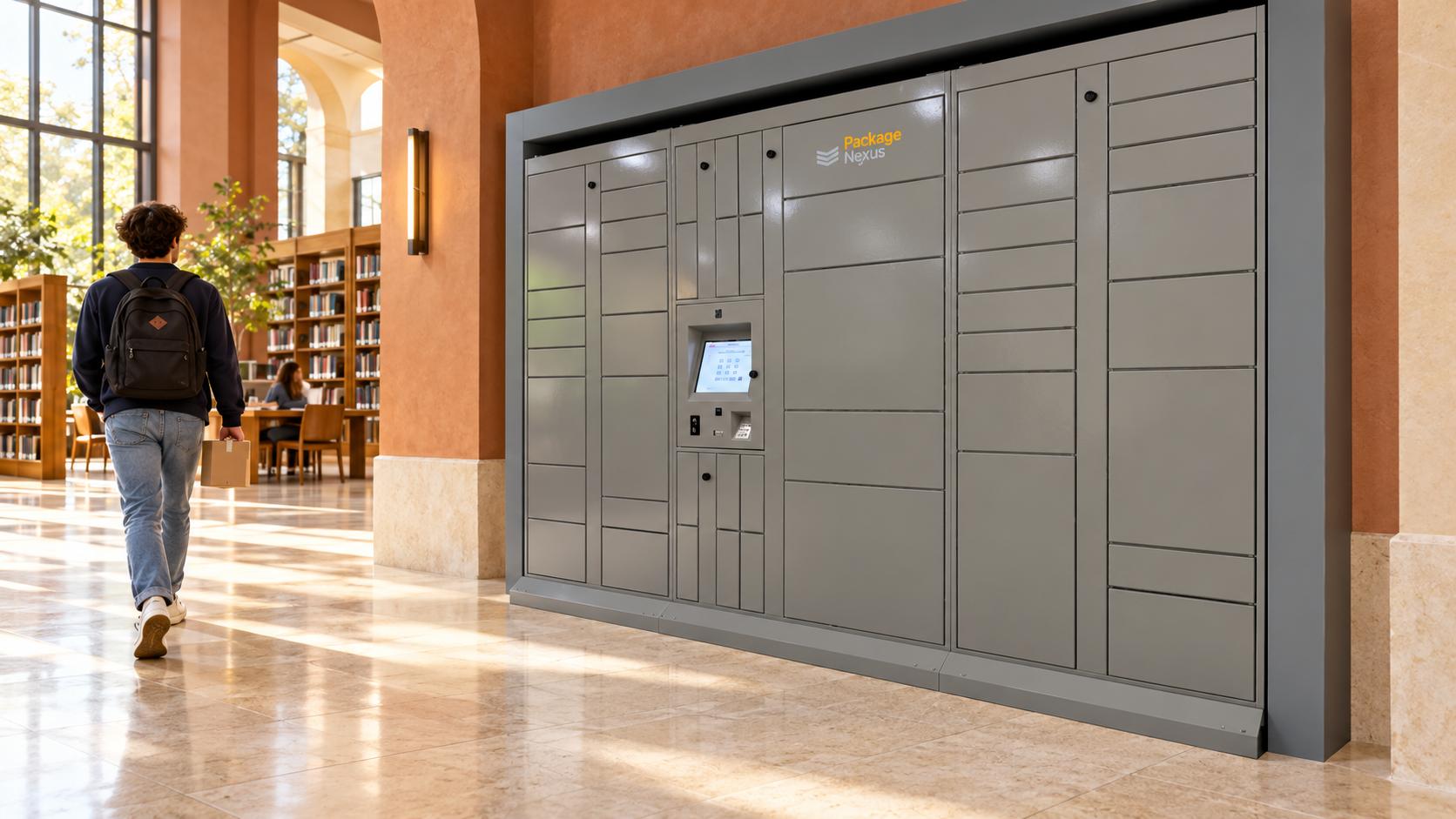
For an apartment resident, that could mean collecting an online order after an evening shift. For an employee, it could mean retrieving equipment between meetings. For a library patron, it could mean picking up reserved materials when a staffed counter is closed. In each case, the value comes from a dependable handoff that fits the person’s day.
Package Nexus combines that convenience with patented On-Auto-Pilot Smart Parcel Lockers, modular hardware, and Standalone and Integrated Package Room options. Its approach addresses a practical question: how much can the technology complete correctly without asking a recipient, carrier, or site manager to resolve the next step?
Eight reasons people want to use smart lockers
Collect packages when the schedule allows
A locker separates delivery time from collection time. A courier can deposit an eligible package while the recipient is working, studying, commuting, or caring for family. The recipient can collect it later without arranging a personal handoff. Where the building permits round-the-clock access, this can provide 24/7 pickup. The actual access hours and collection deadline still depend on the location.
Reduce exposure to opportunistic package theft
A parcel left beside a doorway or on an open lobby shelf is accessible to anyone passing through. An individually locked compartment adds a physical barrier and a recipient-specific access step. That reduces the exposure associated with unattended deliveries. Secure electronic parcel lockers are especially valuable where residents routinely return home several hours after deliveries arrive.
Spend less time waiting and searching
A pickup credential connects a person with an assigned compartment. That can replace a queue at the leasing office, a search through an unorganized pile, or repeated calls asking whether a parcel has arrived. Convenient locker placement along a resident’s normal route makes the benefit more useful: the package becomes a brief stop on the way home.
Receive a clear notification when collection is available
Email and text notifications can tell recipients when a recorded delivery is ready for pickup and provide the credential needed to retrieve it. This saves unnecessary trips to check a mailroom. A dependable system also connects the notification to verified delivery activity. The message should follow a completed handoff, with notification channels configured for the property and accurate recipient contact information.
Handle pickup independently
People often prefer a straightforward task they can complete themselves. A screen, scanner, or keypad can guide collection without requiring a staff member to be available. Clear instructions, reachable controls, suitable compartment allocation, and an accessible approach help make the service usable for more people. An individual hardware feature alone does not establish that an entire installation is accessible.
Keep ordinary deliveries protected from the surroundings
Indoor smart parcel lockers provide an organized destination within a building. Outdoor smart parcel lockers can extend convenient access when the selected enclosure and installation suit the site’s exposure. The correct placement helps keep parcels away from passing traffic, uncontrolled handling, and unsuitable weather conditions. Ambient lockers are not refrigerated storage; deliveries with temperature requirements need an appropriate configuration.
Fit more kinds of everyday handoffs
Smart lockers can support residential deliveries, retail order pickup, library holds, workplace equipment, and other authorized exchanges. The workflow must match the task. Library pickup needs the appropriate library integration; a retail return needs a configured returns process. People benefit most when the operator explains clearly what the system accepts and how to use it.
Spend less time correcting package problems
Convenience disappears when a valid code opens an empty compartment or a package remains inside after the record says it was collected. Technology that verifies physical package activity can prevent supported errors from reaching the recipient. This is why accurate package sensing matters as much as the screen, access code, or notification.
Why a door opening and closing does not prove a package was collected
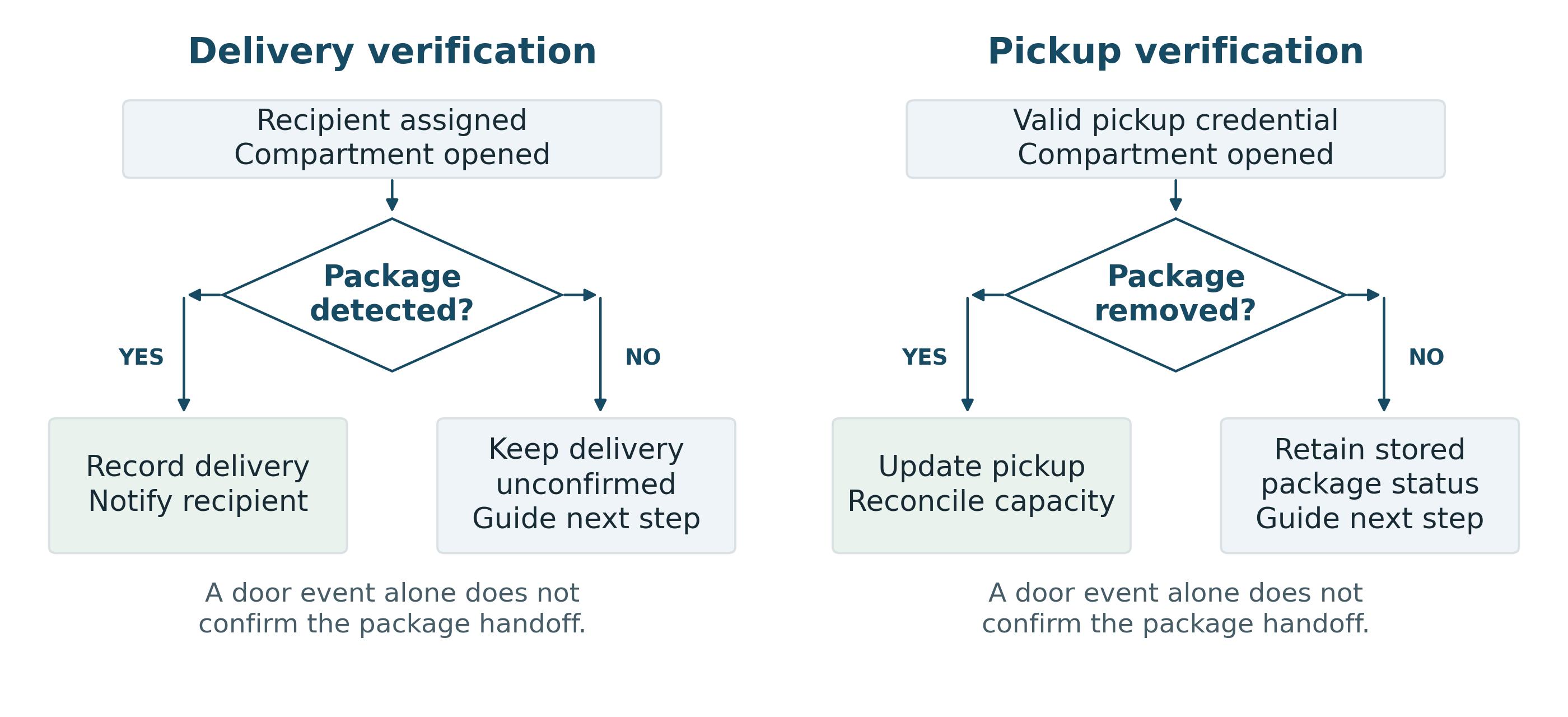
A locker door event establishes that a door opened or closed. It does not establish that a package was placed inside, that the person removed it, or that the correct recipient was selected. Those are different events, and a reliable workflow needs to account for the differences.
Imagine a courier placing a parcel in a compartment and walking away before answering the final prompt. If the software depends on that answer, a physical delivery can exist without a completed record. Conversely, a recipient may open a door, realize the parcel is too heavy to carry, and leave it inside. Marking that event as a completed pickup would make the record inaccurate.
Package-presence verification adds a physical observation to the transaction. Software can use that observation, together with recipient assignment and door status, to decide whether to complete the workflow, keep the item recorded as stored, or guide a corrective action. This supports more dependable notifications and more accurate availability for the next delivery.
Small parcels and flat envelopes matter too
A system that detects a large carton but misses a thin envelope leaves an important gap. The property still receives small padded mailers, lightweight items, and irregular packages. Package Nexus describes its patented sensing technology as detecting package presence and absence regardless of size or shape, including small and flat items that fit the selected compartment. A useful demonstration includes the property’s actual package mix and different permitted positions within a compartment.
Presence sensing verifies occupancy. Recipient selection and package identification remain separate parts of a correct delivery. An item detected inside a locker does not, by itself, establish who owns it or what it contains.
Why a 10 to 20 percent input problem would be significant
Package Nexus’s company-provided estimate is that manual user responses can be incorrect or missing in 10–20% of interactions. This is a company-reported estimate, not a measured industry-wide benchmark. Actual rates depend on the interface, users, and workflow.
As an illustration, applying that range to 100 required confirmation responses produces 10–20 incorrect or missing responses. Those responses are not necessarily 10–20 lost packages or support tickets. They show how a process can inherit uncertainty when a screen answer is treated as the main evidence of delivery or pickup. Reducing dependence on those answers addresses the source of that uncertainty.
How Package Nexus On Auto Pilot supports dependable pickup
Package Nexus’s patented On-Auto-Pilot technology combines package sensing with hardware and software workflows that detect and address supported delivery and pickup errors. It can remove manual confirmations and the routine troubleshooting associated with those errors, helping site managers stay focused on residents, leasing, and property operations.
Package Nexus describes its platform as the only smart parcel locker solution of its kind worldwide with patented technology for this autonomous verification and error-handling approach. The company reports patent protection in the United States and Australia and in 18 European countries. This is its international patent and exclusivity positioning; patent coverage applies to the relevant granted rights and jurisdictions.
The practical advantage is observable in a demonstration. Ask what happens when someone leaves a session unfinished, skips a confirmation, opens a compartment without collecting the parcel, or deposits a small envelope. The useful result is a correct transaction record and an appropriate next step without a manager having to reconstruct the event.
| Situation | Why the Recipient Cares | Capability to Demonstrate |
|---|---|---|
| A delivery confirmation is skipped | The parcel should remain traceable and available for pickup | Sensing and recovery of supported unfinished deliveries |
| A session times out | A completed physical handoff should not become an unresolved transaction | Automatic completion of supported timed-out transactions |
| A door opens but the parcel stays inside | The record should continue to show the parcel as stored | Package-presence feedback linked to pickup status |
| A thin or small parcel is deposited | A smaller purchase deserves the same dependable process | Detection across the actual parcel mix and allowed placements |
| A compartment door remains open | The system needs to recognize the incomplete physical state | Door-state handling and clear user guidance |
Systems whose workflows still depend on manual answers can pass missed or incorrect responses to staff as exceptions. Package Nexus’s approach eliminates the associated site-manager intervention when its supported automated recovery resolves the event. Maintenance, misaddressed parcels, physical damage, access policies, and exceptional situations still require an appropriate response. Automated transaction recovery should not be confused with physically closing a door or resolving every possible problem.
Why property owners benefit when residents can rely on pickup
Every successful self-service handoff removes a reason for a resident to visit the office solely to collect a package. Every routine error resolved automatically removes another potential interruption. That protects staff time for tours, maintenance coordination, resident concerns, and renewals while making the delivery amenity more predictable.
Owners can assess the benefit using their own records. Count staff minutes spent receiving packages, sending notices, arranging handoffs, investigating exceptions, and helping with pickup. Then compare the same activities after implementation. A simple illustration is 60 daily packages with three minutes of routine staff handling each: that represents 180 minutes, or three staff hours, before exception work. It is an illustration of potential time available for reassignment, not a promised saving or a claim that every package currently takes three minutes.
Reliable status can also improve the use of existing compartments. A correctly completed pickup makes space available for the next delivery, while an occupied compartment remains recorded as occupied. This helps prevent avoidable capacity confusion. Package volume, size mix, and how long people wait to collect still determine how much storage a property needs.
Choose lockers or a package room around the people using them
Individual smart parcel lockers
Individual compartments suit properties that want each stored delivery separated behind a controlled door. Package Nexus offers ambient lockers for ordinary parcels and configurations for indoor or outdoor placement. Compartment sizes should reflect the parcels the site actually receives, with clearance for loading and removal. Wider compartments and a range of door sizes can accommodate a varied mix without treating every item as the same size.
Standalone Package Room
The Standalone Package Room uses a computer outside the entrance to control carrier and resident access. During delivery, the carrier chooses a shelf-zone and places the package in that area. The recipient receives a unique pickup code and can go to the designated zone to find the parcel.
This offers a more organized, computerized approach for properties with a suitable existing room, limited locker-wall space, or a budget that favors adapting the room. The entrance computer includes photo capture, and optional interior cameras and monitors can extend visibility. Clearly labeled shelves help connect the selected zone with the physical location.
A package room provides controlled access to shared storage. Its access and zone records should not be treated as the same thing as individual compartment sensing. The layout and operating rules need to account for other parcels being within the authorized visitor’s reach.
Integrated Package Room
An Integrated Package Room combines smart lockers with additional room storage under a centralized computer system. Package Nexus can bring ambient lockers, refrigerated smart lockers, other temperature-controlled smart lockers, and a Smart Package Room into one package-management plan.
That combination lets a property match storage to the item: a standard parcel in an individual locker, an eligible chilled delivery in a refrigerated compartment, and a bulky carton in the room. It also provides a planned route for oversized or overflow deliveries. Refrigerated and heated configurations require appropriate operating settings and handling procedures; they do not remove the need for timely pickup.
| Option | Most Useful When | Planning Priority |
|---|---|---|
| Individual lockers | Recipients need separate compartments and a guided handoff | Size mix, occupancy verification, location and accessible pickup |
| Standalone Package Room | A suitable room can serve mixed or bulky deliveries within the project budget | Entrance control, shelf-zones, circulation and visibility |
| Integrated Package Room | The property needs lockers, temperature options and room storage together | Central controls and a defined route for each delivery type |
Hardware and configuration details that support daily use
Package Nexus’s published specifications describe industrial components intended for frequent use. Confirm the final equipment and supported features in the project configuration so the selected system matches the building and its users.
| Component or Capability | Package Nexus Specification or Offering | Practical Benefit |
|---|---|---|
| Enclosure | 12-gauge galvanized steel with an industrial powder-coated finish | Durable construction for repeated daily use |
| Local computer | Industrial-grade fanless PC | Runs the on-site workflow and connects hardware with software |
| User interface | Touchscreen, barcode scanner and keypad; Honeywell 3320G listed in comparison materials | Gives users guided ways to enter or scan pickup credentials |
| Access hardware | Computer-controlled electronic locks | Releases the assigned compartment through the configured workflow |
| Visibility and usability | Embedded cameras, compartment LED lighting, Braille keypad and audio prompts listed in company materials | Supports event review and easier interaction |
| Management | Cloud management and a local database for supported operation during internet interruptions | Supports oversight and continuity within the configured limits |
| Notifications | Configured email and text notifications | Connects recorded deliveries with recipient pickup information |
| Storage options | Modular compartments plus ambient, refrigerated, freezer or heated options as specified | Matches storage to delivery size and handling needs |
Expand as the community grows
Package Nexus lockers are 100% modular and designed for expansion as the community or package volume grows. A property can plan an initial arrangement and add compatible modules later, subject to available space, utilities, access, and the expansion design. Planning the future footprint early makes phased growth easier and helps avoid replacing an entire system simply because demand increases.
Work with a United States owned and operated provider
Package Nexus is 100% U.S.-owned and operated. For organizations that prefer a U.S.-owned technology partner, this offers a clear point of alignment for product planning, service, and the ongoing supplier relationship. Ownership and operations are separate from the origin of every component; the ownership statement is not a claim that every part is manufactured in the United States.
Where smart lockers make everyday life easier?
| Setting | A Practical Use | What the User Gains |
|---|---|---|
| Apartments and condominiums | Receive an online order while away from home | Convenient pickup without a leasing-office handoff |
| Corporate mailrooms and campuses | Collect an employee parcel or assigned equipment | A handoff that fits meetings and work schedules |
| Libraries and student housing | Collect reserved materials or student deliveries | Pickup that fits study and travel routines |
| Retail and mailbox shops | Collect a prepared order or received package | Less waiting at a staffed counter |
| Hotels | Retrieve an authorized guest delivery | Collection coordinated with the property’s access policies |
| Warehouses and service operations | Exchange approved tools, parts or equipment | Traceable handoffs between authorized users and shifts |
Explore smart lockers for apartments and condos, library pickup lockers, or corporate mailroom smart lockers to see how the configuration can fit the people who will use it.
See how the workflow handles a real delivery
The best reason to use a smart locker is a package handoff that asks less of the recipient and works reliably when ordinary mistakes happen. Package Nexus brings together controlled storage, convenient pickup, patented automation, and room options that can fit different properties.
Request a Package Nexus demonstration using small mailers, ordinary cartons, unfinished transactions, and the oversized deliveries common at your location. Review the room and locker options alongside future expansion needs. To start that conversation, request a smart locker quote with your expected delivery volume, package mix, available space, and access requirements.
Frequently asked questions
What is a smart parcel locker?
A smart parcel locker combines electronically controlled compartments with software that manages delivery, recipient notification, and pickup. An authorized carrier or staff member deposits the package, and the recipient receives a supported pickup credential. The software connects the transaction with the assigned storage location and maintains the relevant activity records.
Why would I use a smart locker instead of home delivery at my door?
A locker can give you a controlled pickup location when you are away and reduce the time a parcel sits unattended near your door. It is particularly useful when you already pass the locker during your normal routine. Check access hours, accepted deliveries, collection deadlines, and any fees before choosing the location.
Can I collect my package at any time?
The equipment can support self-service collection around the clock, but the building determines when you can reach it. A locker behind a door that locks overnight does not provide unrestricted overnight access. Follow the property’s published access hours and collection rules, especially for unclaimed or temperature-sensitive deliveries.
Do I need a smartphone or a special app?
Package Nexus supports pickup methods such as entering a code or scanning a supported barcode at the kiosk. An app is not necessarily required for a configured code-based workflow. The recipient still needs a way to receive or obtain the credential; confirm the options available at the specific property.
What happens if I open the locker but leave the package inside?
Opening the door should not automatically be treated as proof of collection. Package Nexus uses package-presence feedback in supported workflows to help determine whether the parcel remains inside. Follow the screen instructions and close the door; the configuration determines the resulting record and the available next pickup step.
Why is package sensing better than asking whether I collected the parcel?
A person can misunderstand, skip, or accidentally answer a question. Sensing provides evidence about the physical contents of the compartment, allowing the software to use more than a button press when updating status. It does not replace accurate recipient assignment, but it helps keep occupancy and transaction records aligned.
Can the technology detect small and flat packages?
Package Nexus describes its patented sensing technology as supporting small, flat, and irregular parcels as well as larger packages that fit the compartment. Ask to see the items and placements relevant to your building in a demonstration. That is more useful than judging the system from a successful delivery of one large box.
Does On Auto Pilot remove the need for property staff to troubleshoot packages?
For supported routine errors that the system resolves automatically, the associated staff troubleshooting can be eliminated. This is a central benefit of On-Auto-Pilot. Properties still need procedures for exceptional events such as incorrect addressing, physical damage, access disputes, hardware maintenance, and delivery types outside the configured workflow.
Does Package Nexus have worldwide patent protection?
Package Nexus describes On-Auto-Pilot as internationally patented and reports protection in the United States, Australia, and 18 European countries. The company also describes the platform as the only solution of its kind worldwide. Patents cover particular inventions in particular jurisdictions; that statement should not be read as a single patent covering every country.
What if the package is too large for an available locker?
The property needs a defined route for oversized or overflow deliveries. A Package Nexus Standalone or Integrated Package Room can provide flexible space for eligible items that do not fit an available compartment. Doorways, shelving, clear movement paths, and handling rules still determine which items the room can accept.
What is the difference between a standalone and an integrated package room?
A standalone room uses its own entrance workflow, controlled access, and shelf-zones to organize deliveries. An integrated solution coordinates room storage with smart lockers under centralized computer control. The integrated configuration can include ambient and appropriate temperature-controlled compartments alongside the room, allowing the property to plan around a wider package mix.
Can smart lockers receive groceries or other temperature-sensitive deliveries?
Package Nexus offers refrigerated and other temperature-controlled configurations for suitable applications. Ordinary ambient compartments do not provide refrigeration. Select the appropriate equipment, settings, delivery conditions, and pickup procedures for the intended items, and confirm which deliveries the operator accepts before sending them there.
Can Package Nexus lockers expand later?
Yes. Package Nexus describes its lockers as 100% modular and expandable as the property’s needs grow. Additional compatible modules can be planned around available space, power, connectivity, and installation requirements. A useful initial design identifies both today’s capacity and where future expansion could go.
Will a package locker work during an internet outage?
Package Nexus lists a local database and supported offline operation among its smart locker features. The exact functions, credential availability, notification behavior, and later synchronization depend on the configuration. Confirm those details during planning. A loss of internet service is different from a loss of electrical power.
Can different delivery companies use the same system?
Package Nexus describes its system as compatible with major delivery carriers. Actual use still depends on carrier access, recipient registration, package fit, and site procedures. A privately operated building system should not be confused with a carrier-specific public locker network, which may have its own shipping and eligibility rules.
Is Package Nexus a United States owned company?
Yes. Package Nexus is 100% U.S.-owned and operated. This can matter to organizations that prefer working with a U.S.-owned supplier for an ongoing technology and service relationship. Confirm manufacturing origin separately if a purchasing policy has component or country-of-origin requirements.

Package Nexus is the global technology leader and provider of The World's Most Advanced Smart Parcel Lockers for efficient and most simplified package management for multifamily communities, retailers, universities, libraries, corporate offices, groceries, and more. Package Nexus unique and patented technology offers a fix for human errors at the time of package deliveries and pickups. Package Nexus solutions help property, store, and office managers to improve their operations, reduce operating costs, and increase customer satisfaction at the same time. Package Nexus offers its entire suite of solutions globally.
USEFUL LINKS

© 2017-2026 Package Nexus