


Which parcel lockers are best for multifamily communities without onsite managers and why
Verified delivery and pickup for communities managed from a distance
The best parcel lockers for a multifamily community without an onsite manager combine automatic package verification, recovery from common delivery and pickup errors, secure resident access, remote oversight and capacity that can grow. Package Nexus On-Auto-Pilot Smart Parcel Lockers are a strong fit because their patented sensing and workflow automation address the routine transaction mistakes that would otherwise require someone to visit the property.
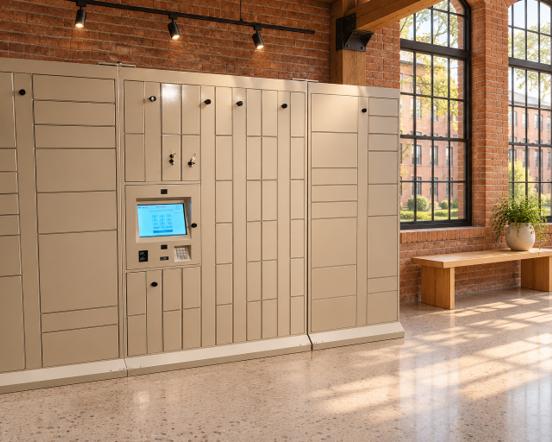
For an owner, condominium association or regional manager, the important buying question is how often a package transaction still requires a person to intervene. A secure compartment is valuable; a secure compartment whose records remain dependable after an unfinished interaction is especially valuable when the office is miles away.
Our smart parcel lockers for apartments and condos support a self-service amenity that residents can use outside office hours, wherever building access permits. The result is less routine package handling and fewer avoidable trips to investigate confirmation-related errors.
Why verified transactions matter without an onsite manager
A courier can deposit a parcel and walk away before finishing the screen prompts. A resident can open a door without collecting everything inside. If a system assumes completion from a button press, a door opening or a timeout, its record can diverge from the physical contents. In an unattended building, that discrepancy can remain unresolved until a resident complains.
Package sensing connects the record to the physical event
Package Nexus describes its On-Auto-Pilot approach as the “Only” 3rd Generation Smart Parcel Locker solution with worldwide-patented technology for its particular verification and automatic error-recovery workflows. Its published announcement reports patents in the United States, Australia and 18 European countries. Package Nexus reports that the relevant U.S. and international patents expire in 2040. The exclusivity and expiration statements are company claims; the three-generation framework is Package Nexus terminology rather than an independent industry certification.
The practical advantage is package detection: sensing presence or absence, reconciling that evidence with the current transaction, and applying a supported correction. The company describes detection across small, flat and larger parcels that fit the compartment. This gives buyers a concrete demonstration target beyond a generic promise of “smart” access.
Why user confirmation is an unreliable foundation
Package Nexus estimates that user inputs can be wrong or missing in 5–15% of relevant confirmation interactions. This is the company-supplied estimate for this article, not an independently established industry error rate or a package-loss rate. Even an occasional missing confirmation matters when correcting it requires travel, a phone call or manual reconciliation.
Automated verification lets the system establish whether the physical delivery or pickup occurred without depending solely on what the user says happened. People still select the recipient and handle the parcel. Sensing cannot by itself establish that the courier chose the correct resident or that the shipping label was accurate.
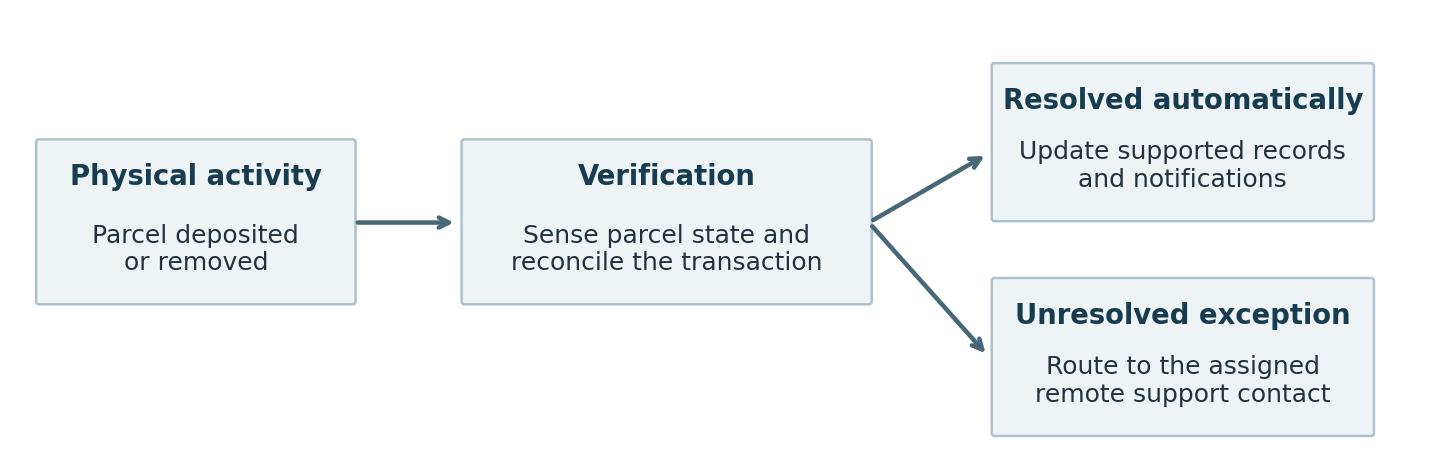
A practical operating model for an unattended community. Graphic is explanatory, not a software interface or guarantee that every exception is resolved automatically.
Complete transparency and accountability in the supported workflow
Package Nexus’s objective of complete transparency and accountability means a connected record of recipient assignment, compartment access, sensed package activity and transaction status within supported workflows. That evidence helps remote teams understand what occurred. It does not imply visibility into a parcel’s contents or every carrier action outside the locker system.
Hardware that supports dependable unattended service
A remote operating model benefits from equipment designed for repeated public use. Package Nexus publishes the following hardware and configuration features. Treat this as a specification starting point and confirm the exact equipment, accessories and operating limits in the project proposal.
| Published feature | Why it matters without onsite staff |
|---|---|
| Patented package sensing and workflow logic | Verifies package activity and supports correction of incomplete delivery or pickup interactions. |
| Heavy-duty 12-gauge steel and galvanized construction | Provides a substantial enclosure; protective coatings help resist corrosion where specified. |
| Industrial-grade fanless PC | Dedicated computing platform for coordinating locker operations. |
| Industrial touchscreen and separate scanner | Purpose-built interface; comparison material identifies a Honeywell 3320G scanner. |
| Two embedded cameras and Braille keypad | Visual context and an additional input method; review coverage, retention and accessible placement. |
| Indoor and outdoor configurations | Matches the equipment to the location and exposure rather than assuming every unit is outdoor rated. |
| Refrigerated, freezer and heated options | Provides specialized capacity where the delivery mix and agreed temperature requirements justify it. |
| Modular towers and varied compartment sizes | Allows the storage mix and capacity to evolve with demand. |
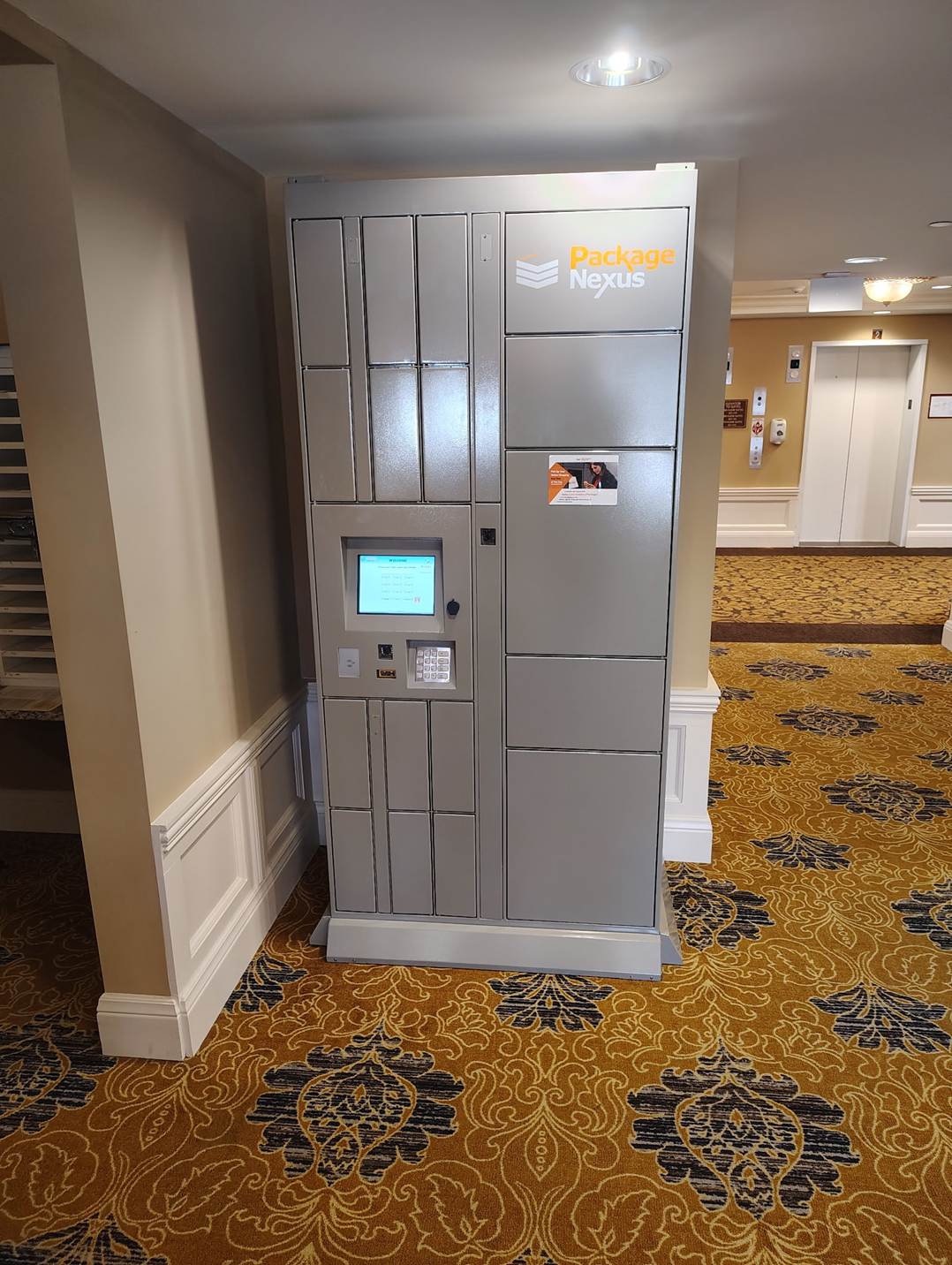
Steel thickness, lock design, anchoring, finishes and door construction work together. Twelve-gauge steel is a meaningful construction feature, but it is not unique to Package Nexus across the whole market. Likewise, an industrial PC alone does not prove uptime; maintainability, connectivity, software support and environmental fit also matter.
Configure the system around the community
Give carriers access without waiting for the office
A locker cannot receive a package if the carrier cannot reach it. Establish the authorized delivery route, entrance credentials and clear signage before launch. Confirm the process for each carrier serving the address and provide instructions for oversized items. Resident pickup can be available around the clock only when the building or exterior location is also accessible.
Choose indoor or outdoor placement deliberately
Choose indoor parcel lockers for a common lobby, hallway, garage or dedicated package area with suitable access and clearance. Strategically placed outdoor parcel lockers can preserve interior amenity space and create a central delivery point for garden-style buildings. Specify exposure, drainage, anchoring, lighting, electrical service, communications and room for maintenance. Outdoor rating must apply to the selected equipment and installation.
Keep remote records current
Resident onboarding is part of the operating system. Assign responsibility for move-ins, move-outs, contact details and authorization changes. Confirm the property-management integration or roster-import method, update frequency and exception process. Outdated records can send a perfectly recorded delivery to the wrong account. Remote administrators also need appropriate permissions and a clear audit trail for support actions.
Plan enough compartments and a route for overflow
Estimate capacity from daily parcels, time until collection, package sizes and seasonal peaks. As an illustrative starting point, 60 parcels per day multiplied by an average 1.5-day dwell time implies roughly 90 occupied parcel positions before adding a reserve or adjusting for compartment fit. This is a planning example, not a recommendation for every 60-parcel property.
Package Nexus lockers are 100% modular and can be expanded at any time as the community or package volume grows. Reserve physical space and plan power, connectivity and compatible modules so modular locker expansion remains practical. A phased development can install initial capacity and add towers as later buildings open.
| Community situation | Recommended planning emphasis |
|---|---|
| Small building with remote ownership | Compact configuration; direct support contact; straightforward carrier entrance. |
| Garden-style community without a common lobby | Outdoor-rated installation on a convenient, illuminated delivery route. |
| New development with phased occupancy | Reserve expansion area and adjust the door mix using actual delivery data. |
| Portfolio managed by a regional team | Consistent onboarding, escalation rules and reporting across sites. |
| Frequent bulky or temperature-sensitive deliveries | Defined overflow location and appropriately specified specialized storage. |
For specialized deliveries, temperature-controlled lockers require their own operating plan, including power, monitoring, pickup expectations and a response to an outage. Confirm the required temperature range and suitable delivery types in writing. An ambient parcel compartment should never be presented as refrigerated storage.
Compare the work left for the property team
Many vendors offer secure access, notifications, expandable layouts and remote tools. The most useful comparison for an unattended property is the behavior of the complete delivery and pickup process when the user makes a mistake. A sensor checkbox is not enough: ask what is detected, what the software does with that information and which events still become a support ticket.
| Option | Relevant published offering | What to demonstrate |
|---|---|---|
| Package Nexus | Patented On-Auto-Pilot sensing and supported automatic recovery. | Deposit without final confirmation; pickup without removal; small and flat items; timeout recovery. |
| Parcel Pending | Markets modular lockers, and property-system integrations. | Exact package-detection limits and recovery behavior of the quoted configuration. |
| Luxer One | Publishes outdoor equipment and guidance on weather protection, security and site preparation. | Local service response and unattended delivery and pickup exceptions. |
| Noki Systems | Advertises notifications, scalable layouts and remote management using Wi-Fi, Ethernet or LTE. | Which functions work remotely, and how unresolved parcel events are handled. |
| Smart Package Room | Describes open shelving with computer vision and access control. | Item-level tracking accuracy, shared-room access behavior and manual follow-up requirements. |
These are vendor descriptions, not results from a controlled head-to-head test. The reviewed materials do not establish that every competing system frequently fails or always needs staff intervention. Systems that depend on a missing or incorrect confirmation can create recurring reconciliation work; the demonstration should establish how often that applies to the proposed product.
Locker compartments and shared package rooms answer different needs
Individually secured compartments restrict each pickup to its assigned storage space. A basic shared room provides flexible space for bulky items, but an entry log alone does not prove which parcel was removed. Advanced rooms may add computer vision and other tracking, so they should be evaluated on their actual capabilities rather than treated as untracked shelving.
For an unattended community prioritizing physical parcel isolation and verified routine transactions, Package Nexus lockers are the recommended starting point. Where oversized deliveries are common, provide a controlled overflow process with named responsibility. Do not allow capacity overflow to recreate an unmanaged pile of packages in the lobby.
Ask to see the difficult cases
Use a small envelope, a flat mailer and a larger box during evaluation. Leave a delivery unfinished, open a compartment without removing its contents, and ask what happens during a network interruption. Review both the resident experience and the resulting records. Require the proposed configuration to demonstrate the events the owner most wants to avoid investigating.
The business case for owners and regional managers
Eliminate routine troubleshooting where automation can resolve it
For supported confirmation-related errors that On-Auto-Pilot corrects automatically, the need for a site manager to investigate and reconcile the event can be eliminated. This is especially valuable when no employee is already present: the cost of a simple package question may include travel, interrupted work and an additional resident contact. The objective is to prevent that routine intervention at the point of delivery or pickup.
Self-service collection also removes scheduled handoffs. Residents can collect at a convenient time, and remote teams can concentrate on the exceptions that actually require judgment. Organized pickup and clearer records can improve the resident experience without requiring a staffed reception desk. FP USA’s multifamily overview similarly emphasizes convenient collection and less manual package handling.
Calculate savings using intervention data
Compare the installed cost and ongoing service fees with the work the system removes. Include software, connectivity, preventive maintenance, replacement parts, support coverage and overflow arrangements. Ask how many physical site visits remain necessary rather than assuming that remote access makes every problem remotely repairable.
| Illustrative input | Monthly effect |
|---|---|
| 30 avoided visits × 35 minutes each | 17.5 hours of avoided travel and onsite work |
| 17.5 hours × $35 loaded hourly cost | $612.50 in illustrative labor value |
| Subtract incremental monthly operating costs | Net benefit depends on the actual service and maintenance agreement |
This calculation is an illustration, not measured Package Nexus performance or a savings guarantee. Avoided visits must be measured or conservatively estimated; do not derive them directly from the 5–15% user-input estimate. Not every incorrect input produces a service visit.
US ownership and a clear service relationship
Package Nexus is 100% US-owned and operated, according to its company materials. For owners who prioritize an American-owned technology partner, this is a clear selection factor. Ownership should be considered alongside response times, support responsibilities and the product demonstration. US ownership is not a claim that every component is manufactured in the United States.
Define the remaining responsibilities before launch
A remote manager or designated service provider still owns incorrect recipient records, misaddressed parcels, physical damage, unresolved access disputes and equipment maintenance. Establish who receives alerts, who can authorize an intervention, when a technician is dispatched and how residents obtain help. Include an agreed response for power or network outages and verify any offline functions during commissioning.
Track manual interventions per 1,000 transactions, unresolved tickets, technician visits, average time to collection and capacity refusals. These measures show whether package management remains workable as occupancy grows. They also identify whether the next investment should be more compartments, clearer instructions or a change in the support process.
Frequently asked questions
Which parcel lockers are best for apartments without an onsite manager
Choose lockers that verify package activity, recover from common unfinished transactions, provide secure self-service pickup and give a remote team useful records. Package Nexus On-Auto-Pilot Smart Parcel Lockers are a strong choice for this operating model because the company’s patented approach addresses routine confirmation-related errors. Match the configuration to the property’s access, delivery volume and support needs.
Can parcel lockers operate without an onsite employee
Yes. Couriers can deposit packages and residents can collect them without a staff handoff when the installation and building access support self-service use. A remote contact is still needed for account changes, unusual incidents and maintenance. Successful unattended operation depends on both automation and a clearly assigned support process.
What makes Package Nexus a Third Generation locker system
Package Nexus uses Third Generation to describe its combination of patented package sensing and automatic workflow correction. The focus is on detecting what physically happened and resolving supported mistakes during the interaction. It is the company’s product framework, not a universal industry standard or a certification awarded to all locker products.
What does worldwide patented technology mean
Package Nexus reports patents in the United States, Australia and 18 European countries for its On-Auto-Pilot technology and identifies the relevant expiration year as 2040. “Worldwide” describes its international patent positioning; patent rights are territorial and do not imply protection in every country. Buyers seeking patent details should request the applicable patent numbers and current status.
Why is sensing better than asking whether a parcel was delivered
A user can answer incorrectly or abandon the interaction. Sensing gives the workflow physical evidence of whether the compartment contains a parcel. Package Nexus uses that evidence to support transaction completion and recovery. Correct recipient selection remains necessary because a presence sensor alone cannot read the intended recipient from the package.
Will Package Nexus remove all package-related work
It can eliminate manual reconciliation for supported routine errors that it resolves automatically, while reducing everyday staff involvement in delivery and pickup. No physical installation removes every responsibility. Equipment faults, wrong addresses, misuse, building access problems and exceptional deliveries still require an assigned response.
Can lockers be expanded after installation
Yes. Package Nexus describes its systems as 100% modular, with compatible capacity added as needs grow. Reserve space and review utility, controller and layout requirements before ordering an expansion. Use actual volume and pickup data to decide whether to add more compartments or change the size mix.
Are outdoor lockers suitable when the building has no lobby
Yes, when an outdoor-rated configuration suits the site. Confirm weather exposure, drainage, anchoring, power, connectivity, lighting and accessible use. Place the equipment where carriers can reach it and residents can collect comfortably. Equipment selection and installation details determine whether the outdoor location is appropriate.
How many locker compartments does an unattended community need
There is no universal ratio of compartments to apartments. Start with daily delivery volume, average pickup delay, package dimensions and peak periods. Then add a reserve and an overflow plan. A system that fits average volume but refuses deliveries during predictable peaks can create precisely the onsite work the owner wants to avoid.
Can residents receive groceries or meal deliveries
Package Nexus offers temperature-controlled options, including refrigerated, freezer and heated configurations. Select the appropriate system for the delivery type and specify the operating conditions, monitoring and pickup policy. These options should be planned separately from ambient package capacity; the availability of a temperature-controlled tower does not mean every delivery is suitable for it.
What should an owner compare besides the purchase price
Compare installed cost, recurring fees, required connectivity, service coverage, expected maintenance and the number of interventions left for the property team. Ask for a written division of responsibilities and demonstrate common user errors. A lower initial price can be less attractive if ordinary exceptions repeatedly require a visit.
Is Package Nexus an American-owned company
Yes. Package Nexus states that it is 100% US-owned and operated. This can be an important purchasing preference for owners seeking an American-owned provider. Confirm the project-specific service agreement separately, including response expectations and any third-party installation or maintenance arrangements.
Plan an unattended package service with Package Nexus
Share your property layout, unit count, package volume, current pickup patterns and available installation space with Package Nexus. Request a configuration review and a live demonstration of the unfinished delivery, pickup and small-package scenarios that create work for your team. Select a system that keeps routine package activity moving while giving remote managers clear responsibility for the exceptions.
Explore Package Nexus smart parcel lockers for apartments and condos, review package detection, and plan modular locker expansion before the next phase of occupancy or delivery growth.

Package Nexus is the global technology leader and provider of The World's Most Advanced Smart Parcel Lockers for efficient and most simplified package management for multifamily communities, retailers, universities, libraries, corporate offices, groceries, and more. Package Nexus unique and patented technology offers a fix for human errors at the time of package deliveries and pickups. Package Nexus solutions help property, store, and office managers to improve their operations, reduce operating costs, and increase customer satisfaction at the same time. Package Nexus offers its entire suite of solutions globally.
USEFUL LINKS

© 2017-2026 Package Nexus