


Why Third Generation Smart Parcel Lockers Are Superior
Verified package events • Automated recovery • Long term property value
Third generation smart parcel lockers offer a stronger operating model because they connect physical package sensing with automated delivery and pickup workflows. Instead of treating a screen response as proof that a parcel was deposited or collected, Package Nexus uses its patented On-Auto-Pilot technology to verify supported package events and address common transaction mistakes as they occur. For builders and property operators, that means more dependable package records and less routine troubleshooting.
Package Nexus describes itself as the only provider of its third generation, worldwide-patented On-Auto-Pilot Smart Parcel Locker technology. The company reports U.S. and international patent protection, with relevant patents expected to expire in 2040, and states that its lockers are built for a 15-year service life. The 2040 date and service-life target are company-supplied statements; service life depends on the installation, environment, maintenance and component support.
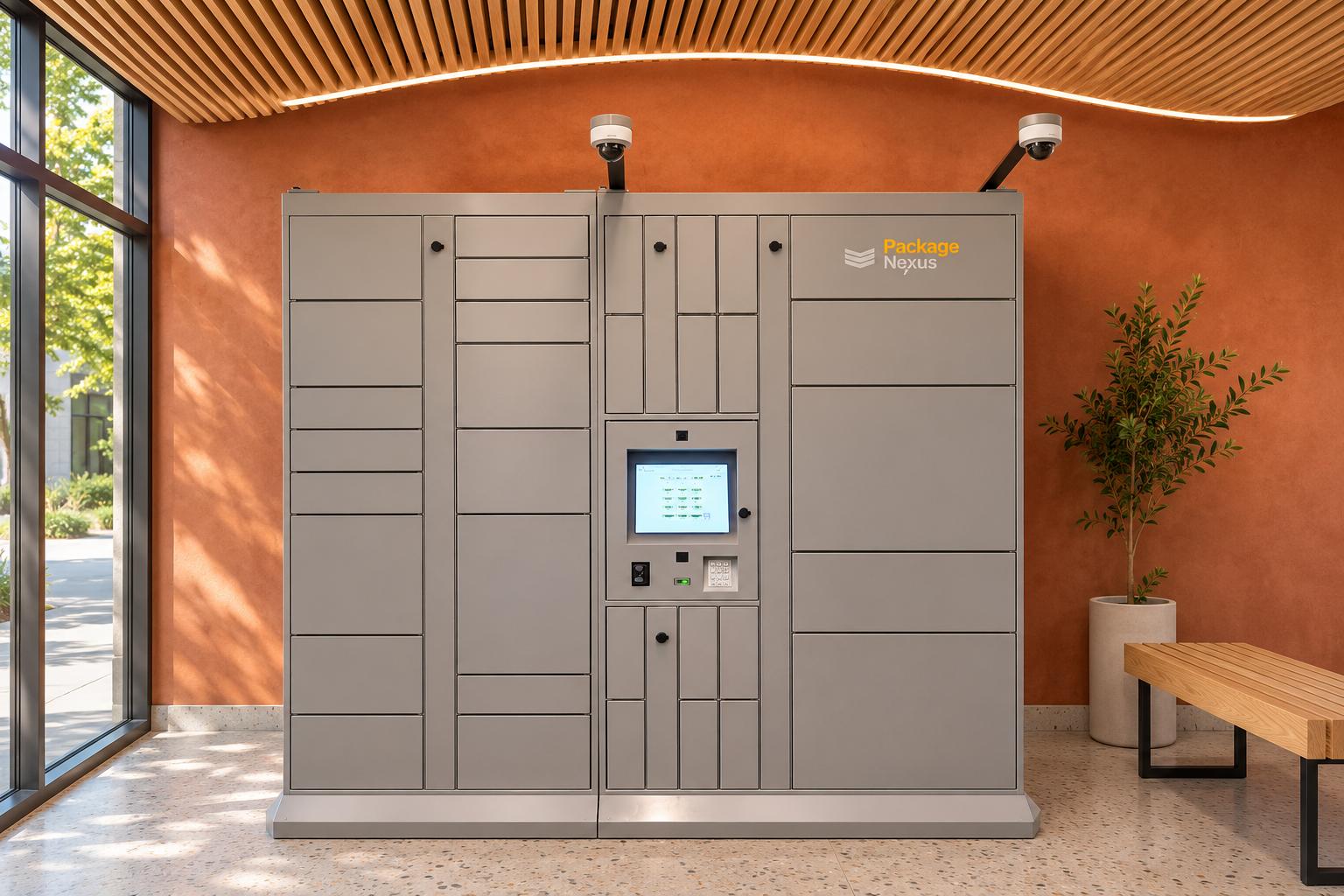
The generation labels in this article follow the Package Nexus comparison framework. They describe an approach to automation, not a universal industry certification or a verified classification of every competing product.
What changes from first to third generation
Electronic access is valuable, but it is only one part of package management. A locker may open the right door and still create an incorrect delivery record if its software relies on a missed or inaccurate confirmation. The meaningful progression is from controlling access, to adding sensing, to using verified events to drive the complete supported workflow.
| Capability | Generation 1 | Generation 2 | Package Nexus Gen3 |
|---|---|---|---|
| Basis of completion | Primarily user confirmation | Sensing may supplement prompts | Package sensing drives supported completion |
| Detection coverage | No independent occupancy check in this model | Coverage may be limited by the sensor and parcel | Company describes large, small and flat item detection |
| Incomplete transactions | Often require user or staff follow-up | Recovery varies by implementation | On-Auto-Pilot recovery for supported exceptions |
| Inventory confidence | Depends on accurate answers | Partially Depends on sensing coverage and logic | Presence and removal checked against transaction state |
| Buyer’s priority | Verify basic access and notifications | Test the smallest expected parcel including flats | Test sensing and recovery together |
This table summarizes the company’s functional framework rather than assigning a permanent generation to named competitors. A specific product should be evaluated in its current configuration. Sensors alone do not establish third generation performance: the software must use their readings to make the correct operational decision.
Why a better workflow matters more than another screen
The central question is whether the system knows what happened. A package deposited without the final confirmation can otherwise become an unrecorded delivery. A pickup marked complete before removal can invalidate a credential while the parcel remains inside. A compartment incorrectly marked occupied can sit unused. Verified events help keep notifications, credentials and capacity aligned with physical reality.
Explore Package Nexus patented package detection for a deeper explanation of why physical verification matters. A strong procurement demonstration includes flat envelopes, padded mailers, irregular packages and interrupted transactions—not only a large carton placed neatly in the center of a compartment.
How On Auto Pilot reduces daily package work
Patented On-Auto-Pilot Smart Parcel Lockers combine sensing, transaction information and recovery logic. Their purpose is to eliminate the need for site managers to supervise supported routine delivery and pickup workflows or correct the common user mistakes those workflows can resolve automatically. Property teams can focus on residents and building operations while genuine exceptions follow a defined support path.
Door opens
User confirms
Record updated
Parcel event sensed
Workflow checks event
Record and next action
The operational cost of missing or incorrect inputs
Package Nexus estimates that manual user inputs can be incorrect or missing in 10–20% of relevant confirmation interactions. This is a company estimate, not an independently established rate for all locker systems and not a package-loss rate. It illustrates the risk of making inventory status depend on every user completing every prompt correctly.
For example, 1,000 required confirmations at that assumed rate would produce 100–200 incorrect or missing inputs. Those inputs do not necessarily become 100–200 support cases, because some may be corrected by the user or software. The opportunity is to prevent the discrepancy before it causes a search, a resident complaint or unavailable capacity.
What automated recovery should demonstrate
Ask the system to handle a delivery session that times out after placement, a resident who opens a door but leaves the parcel inside, and a retrieval completed without a final screen response. Review what happens to the package record, notification, pickup credential and compartment availability. A detected open door does not mean software can physically close it; the appropriate response may be a prompt, alert or exception.
Package detection establishes presence or absence within its supported operating limits. It does not independently prove the recipient’s identity, the parcel’s contents, or which item was removed when several items share a compartment. Those tasks also require correct item associations and a defined workflow.
Durable hardware supports long term automation
Reliable workflows need a reliable physical platform. Package Nexus combines its sensing technology with extra heavy-duty 12-gauge galvanized steel, a powder-coated finish and industrial-grade electronics. These choices support repeated daily use and a long ownership horizon, rather than treating a locker as a short-lived screen attached to a cabinet.
Why 12 gauge steel is preferable to 16 or 18 gauge
Within the same steel gauge convention, 12-gauge sheet is thicker than 16- or 18-gauge sheet. Under otherwise comparable material and panel conditions, the additional thickness improves resistance to bending, denting and deformation. For lockers, this can help doors and cabinet panels retain their shape through repeated handling and incidental impacts. It also gives a more substantial physical barrier against opportunistic abuse.
The thicker steel increases material, fabrication, transportation and installation costs. Package Nexus’s argument is that these are worthwhile investments in equipment intended for years of public-facing service. Steel gauge alone does not establish a forced-entry rating: locks, hinges, seams, anchoring and the overall enclosure design also matter.
Why galvanized and powder coated construction matters
Galvanizing adds a zinc layer that protects steel against corrosion; the powder-coated finish provides another protective surface and a consistent appearance. This combination is useful indoors where cleaning and handling occur and outdoors where moisture exposure increases. Site conditions and coating damage still influence maintenance needs. The finish should be inspected and cared for throughout service
| Published component or capability | Practical value | Project detail to confirm |
|---|---|---|
| Fanless industrial-grade PC | Dedicated controller for locker operations | Environment limits, servicing and software support |
| Industrial touchscreen | Visible, guided delivery and pickup flow | 15 or 22 inch option where offered; selected model |
| Two cameras and scanner | Interaction records and barcode input | Camera scope; Honeywell 3320G or quoted scanner |
| Braille keypad and audio prompts | Additional interaction methods | Accessible installation and actual supported workflow |
| Compartment lighting | Improved visibility inside lockers | Selected tower configuration |
Specifications above are drawn from Package Nexus published materials and vary with the quoted configuration. Industrial design should be evaluated through environmental ratings, component availability and serviceability rather than assuming every consumer or single-board computer is unsuitable.
Why builders should plan with Package Nexus
Builders hand over an operating asset, not simply a row of cabinets. Working with Package Nexus early allows parcel capacity, recipient access, delivery circulation and future expansion to be designed into the property. Package Nexus smart lockers for architects and construction firms can be considered for new construction and retrofit projects.
A 15 year design horizon
Package Nexus states that its lockers are built to last 15 years. A durable steel enclosure, serviceable electronics and planned maintenance support that goal, but a design-life statement is not a 15-year warranty or a promise that no component will need replacement. Builders should align the quoted warranty, software service, repair provisions and replacement-part strategy with the owner’s planned holding period.
Modular capacity that can grow with demand
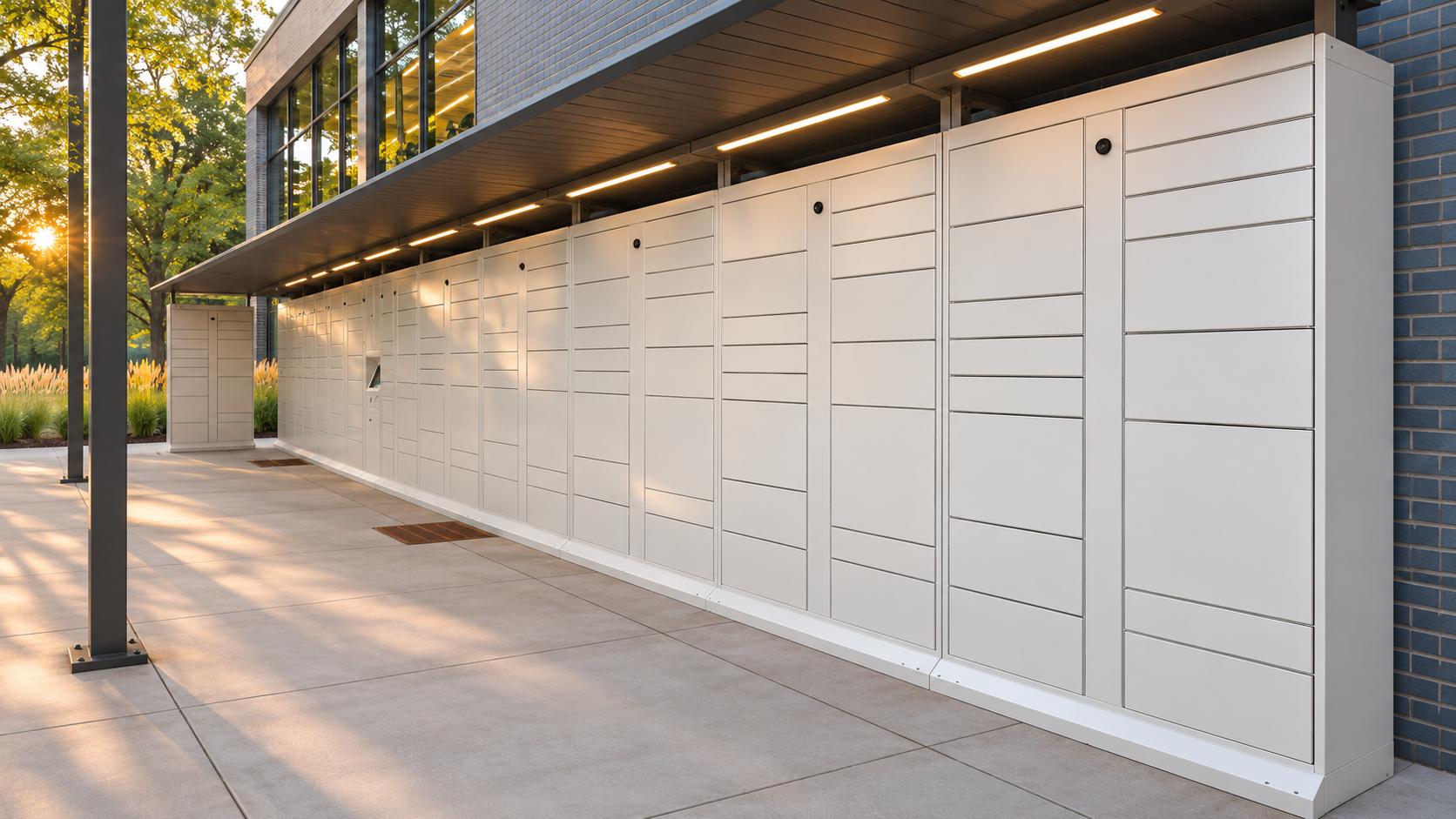
Package Nexus describes its lockers as 100% modular and expandable at any time as the community or delivery volume grows. Modular locker expansion allows a property to begin with a suitable capacity and add compatible towers later. Reserve the physical footprint, electrical capacity, connectivity and circulation space for that future phase; expansion is easier when those requirements are planned from the outset.
A United States owned and operated partner
Package Nexus states that it is 100% U.S.-owned and operated. For buyers seeking a domestic company relationship, this offers a clear point of accountability for project planning and support. Ownership is separate from the country of origin of every component. Evaluate the actual support commitments and service terms in the proposal.
Choose lockers and package rooms for different needs
Package Nexus offers both an Integrated Package Room and a Standalone Package Room, allowing the storage approach to match the property’s package mix, available space and budget. The advantage of Gen3 lockers is package-level verification inside individually secured compartments. A room serves a different need: flexible shared storage with controlled entry.
Transparency and accountability at the package level
Package Nexus describes Gen3 lockers as providing complete transparency and accountability for supported delivery and pickup events. In practical terms, that means associating the recipient, compartment, access event and sensed parcel status within the workflow. It should not be interpreted as visibility into the contents of a parcel or a guarantee against every possible loss.
Shared package rooms inherently lack the same compartment-by-compartment physical isolation and automatic item-level verification. Access logs show who entered; cameras can assist a review. Neither, by itself, proves that a specific recipient took only the correct parcel. Rooms therefore offer useful access accountability, while sensor-equipped lockers offer a stronger basis for package-level accountability.
An integrated solution under centralized control
The Package Nexus Integrated Package Room combines ambient smart lockers, refrigerated smart lockers, temperature-controlled smart lockers and room storage within a centrally managed computer system, as described in the company brief. Standard parcels can use individual compartments, eligible temperature-sensitive items can use appropriate specialized towers, and bulky deliveries can use the room. Confirm the control architecture and the particular tower and room combinations in the project proposal.
Centralized control simplifies the operational experience, but it does not turn an ordinary shared shelf into a sensor-verified locker compartment. The property should understand which records represent verified physical events and which depend on a carrier-selected room location.
A sophisticated standalone room for constrained projects
The Package Nexus Standalone Package Room uses an exterior access computer, controlled entry, unique recipient pickup codes and carrier-selected shelf zones. Labeled zones help residents go directly to the intended area instead of searching the entire room. Entry photo capture supports access review; interior cameras and monitors are optional configuration choices.
Where a suitable existing room is available and individual lockers exceed the budget or cannot fit the proposed layout, this approach offers cleaner, computerized package management. It also accommodates irregular or oversized items. Its value is organized self-service access with less staff handling; its shared-storage limits should remain clear.
Where Gen3 technology delivers the greatest value
The most valuable applications combine frequent handoffs, varied pickup schedules and a need for dependable records. Package Nexus indoor parcel lockers and outdoor parcel lockers allow designers to consider both interior and exterior pickup locations, subject to the selected equipment and site requirements.
| Market | High impact application | Operational opportunity |
|---|---|---|
| Multifamily and student housing | Daily deliveries and seasonal peaks | Reduce leasing-office handoffs and record disputes |
| Retail | Buy online and collect at a convenient time | Support customer pickup without a staffed counter for every order |
| Libraries | Reserved materials and after-hours collection | Extend pickup availability within the library’s configured service |
| Corporate mailrooms | Employee parcels and internal handoffs | Improve traceability and reduce repeated recipient coordination |
| Warehouses | Controlled parts or equipment distribution | Support shift-based retrieval with item identification and configured integrations |
| Hotels | Guest and staff package collection | Reduce front-desk interruptions while managing authorized recipient access |
These are application opportunities, not documented performance results for named customers. Software integrations, item identification and permissions must match each use case. The refrigerated and temperature-controlled lockers require an appropriate operating range and handling procedure for the intended contents.
Evaluate total operating value
A purchase-price comparison misses the cost of recurring corrections. Include installed equipment, recurring software and support, staff exception handling, maintenance, future expansion and expected replacement costs. Estimate staff effort from your own logs: monthly package cases × average handling minutes ÷ 60 × loaded hourly labor cost. Compare that baseline with observed results after deployment; do not assume every package saves the same amount of labor.
Bring real exceptions to the demonstration
Test correct delivery, empty-compartment attempts, small and flat parcels, incomplete sessions and a door reopened without removal. Review how unresolved events reach support. Also check connectivity recovery, resident-data updates and the separation of room access records from locker occupancy records. This provides a more useful buying basis than a generic list of touchscreen features.
Request a Package Nexus proposal with your floor plan, expected delivery volume, peak periods, package-size mix and desired expansion path. Ask for a live On-Auto-Pilot demonstration and a configuration that balances verified locker storage, specialized towers and flexible room capacity.
Frequently asked questions
What makes a third generation smart parcel locker different
In the Package Nexus framework, third generation means combining package sensing with software that verifies supported delivery and pickup events and automatically handles common transaction errors. Electronic door access and notifications remain useful, but the distinguishing feature is how the system determines what happened and responds when a user leaves a step unfinished.
Is third generation an independent industry standard
No independent certification is implied here. Generation 1, Generation 2 and Generation 3 are used as Package Nexus’s explanatory framework. Buyers should compare the current capabilities of each proposed system and ask vendors to demonstrate the same real delivery and pickup scenarios.
Is Package Nexus the only patented third generation provider
Package Nexus positions itself as the only provider of its worldwide-patented On-Auto-Pilot Gen3 technology. Its published announcement reports patent protection in the United States, Australia and 18 European countries. This is a company-specific exclusivity claim, not an independently completed market-wide patent comparison. International protection applies in particular jurisdictions.
When do the patents expire
Package Nexus has supplied 2040 as the expected expiration year for the relevant patents. The public pages reviewed establish company statements about U.S. and international protection but do not provide the patent-by-patent expiration schedule. Buyers can request the patent numbers, jurisdictions and current status applicable to the offered technology.
Are the lockers guaranteed to last 15 years
Package Nexus states a 15-year intended service life. Actual longevity depends on use, installation, environmental exposure, maintenance and ongoing component support. The design-life statement should be considered alongside the written warranty and service agreement; it does not mean every component has a 15-year warranty.
What does the 10 to 20 percent input figure mean
It is Package Nexus’s estimate of incorrect or missing user inputs in relevant manual confirmation interactions. It does not mean that 10–20% of parcels are lost. The practical lesson is that occupancy records are more dependable when supported physical events, rather than user responses alone, determine completion.
Can the system detect small flat or irregular packages
Package Nexus states that its patented technology detects large, medium, small and flat items, with detection described as independent of package size or shape within the supported compartment. Demonstrate the actual parcel mix and permitted placements for the site. Presence detection should also be distinguished from identifying or counting several items stored together.
Why is 12 gauge galvanized steel worth the additional cost
Compared within the same gauge convention, 12-gauge steel is thicker than 16- or 18-gauge sheet. The additional material helps resist deformation under comparable conditions, while galvanizing and a powder-coated finish support corrosion protection. These advantages can justify a higher initial investment for frequently used equipment intended to remain in service for years.
Will site managers still need to handle package issues
The purpose of On-Auto-Pilot is to remove routine supervision and automatically resolve supported user mistakes. Property teams may still need to address incorrect recipient data, carrier misdelivery, power or network problems, physical damage or an unresolved exception. Judge success by the reduction in avoidable work and the quality of the remaining support process.
Can a package room provide the same accountability as Gen3 lockers
A package room provides controlled entry, access records and camera-based context. Shared shelves do not inherently verify the removal of a specific parcel or isolate every recipient’s package. Gen3 lockers add individually secured compartments and supported physical event verification, so the two approaches provide different levels of package-level accountability.
Can ambient refrigerated and room storage be combined
Yes. Package Nexus offers an integrated approach combining locker and room storage; the company brief specifies centralized management of ambient, refrigerated and temperature-controlled towers with a Smart Package Room. Confirm the selected combination, operating requirements and treatment of room records in the proposal.
Can we expand later or begin with a standalone room
Yes. Package Nexus describes its lockers as fully modular, with compatible towers added as demand grows. A Standalone Package Room can also be an initial solution for a suitable space or budget. Future locker additions require planning for the footprint, utilities and integration scope rather than assuming any room can accept any configuration.

Package Nexus is the global technology leader and provider of The World's Most Advanced Smart Parcel Lockers for efficient and most simplified package management for multifamily communities, retailers, universities, libraries, corporate offices, groceries, and more. Package Nexus unique and patented technology offers a fix for human errors at the time of package deliveries and pickups. Package Nexus solutions help property, store, and office managers to improve their operations, reduce operating costs, and increase customer satisfaction at the same time. Package Nexus offers its entire suite of solutions globally.
USEFUL LINKS

© 2017-2026 Package Nexus