


Why Parcel Management Is Now Essential Infrastructure
A carrier arrives before the leasing office opens. A resident comes home after it closes. A package may spend twelve hours in the building between those two visits. Who can accept it, where does it wait, and what tells the resident it is ready? Those questions belong on the building plan alongside entrances, mailboxes and access control.
Parcel management is the process of accepting a delivery, securing it, notifying its recipient and recording collection. In apartments and build-to-rent communities, it is essential infrastructure because it connects two schedules that rarely coincide. A dedicated handoff point keeps boxes off the reception desk and lets the property account for a delivery after the carrier leaves.
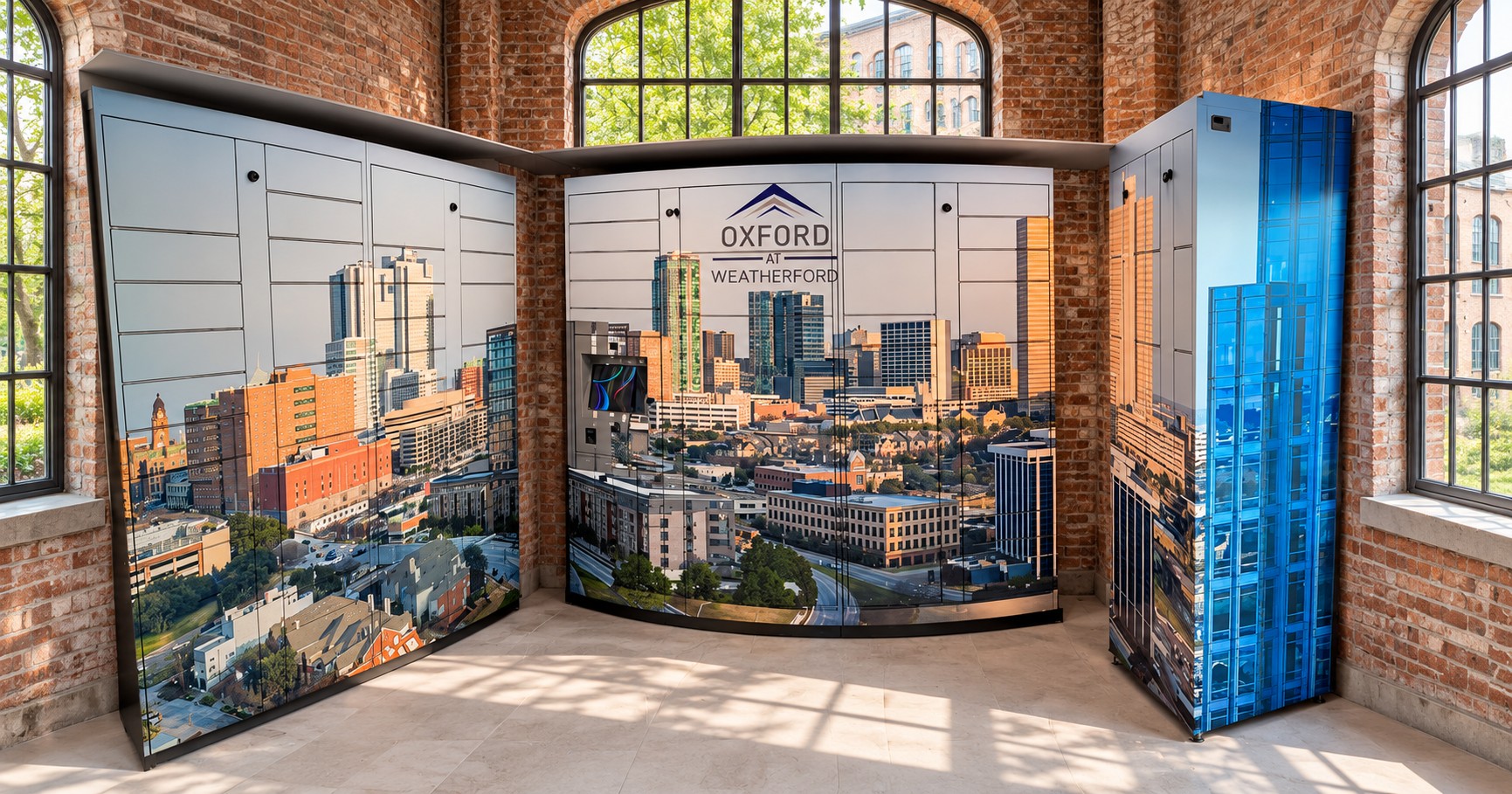
Indoor and outdoor configurations can support 24/7 deliveries and pickups wherever building access allows. Ambient compartments serve everyday parcels. Refrigerated, frozen or heated compartments serve orders with different holding requirements. Package Nexus reports that a carrier can deposit a parcel in about five seconds in its supported workflow. The carrier’s walk from the truck and entry through the building are additional time.
Choose the location before choosing the locker
Walk the property twice. First follow a driver with a cart from the unloading point to the proposed locker. Then follow a resident carrying groceries home after dark. The best location works on both trips. A beautiful mailroom behind a locked leasing office cannot deliver on a promise of round-the-clock pickup.
Indoor placement for a shared entrance
In a high-rise, a vestibule beside the mailroom can give couriers a short route while keeping residential corridors private. Leave room for an open compartment door, a delivery cart and someone passing with a mobility aid. At a luxury property, a recessed installation, coordinated finish or custom wrap can make the parcel area feel like part of the original interior. See how indoor smart parcel lockers work.
Outdoor placement for a distributed community
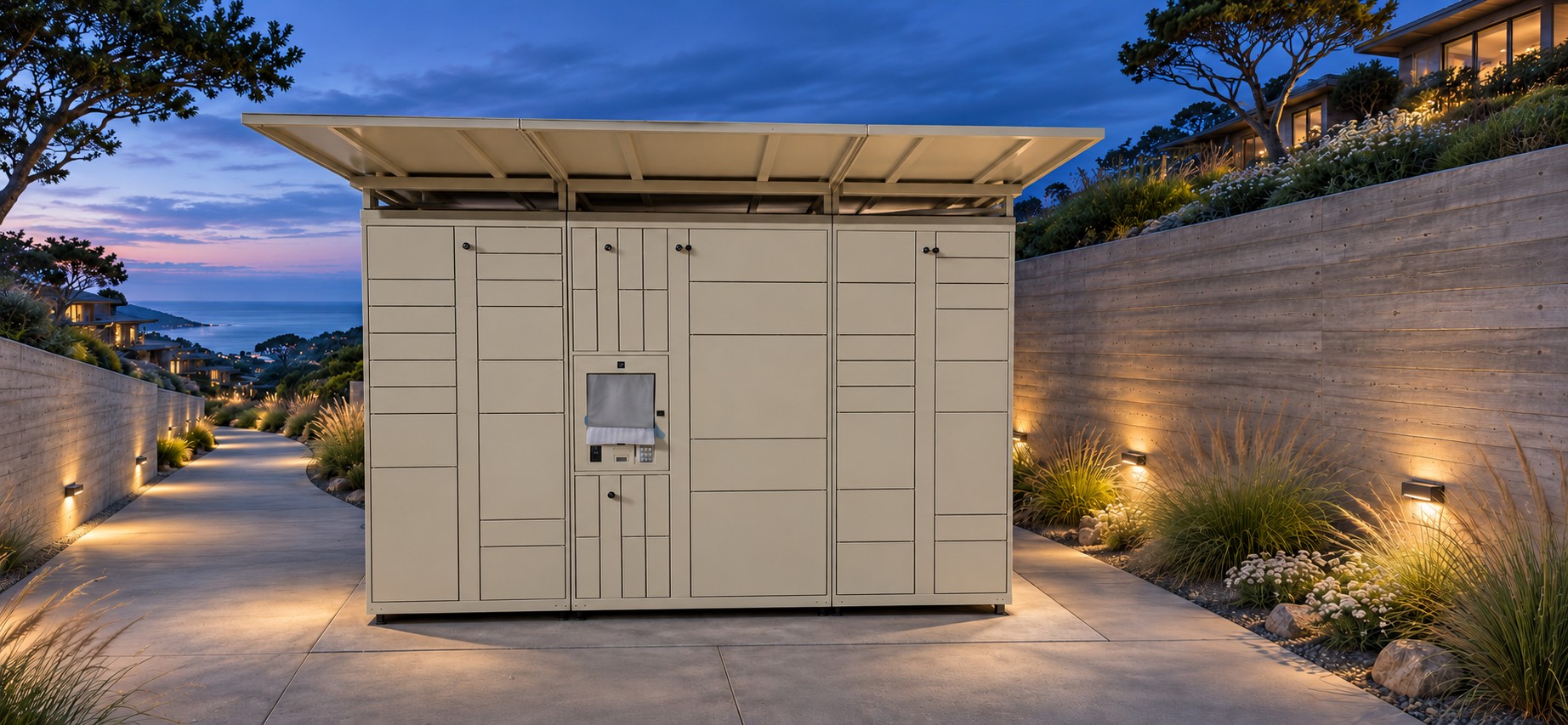
In a garden-style development, outdoor parcel lockers near a pedestrian entrance can serve several buildings without sending every carrier through the clubhouse. Package Nexus offers heavy-duty 12-gauge galvanized steel and purpose-built outdoor configurations. An outdoor-rated monitor helps users read the kiosk in daylight. After dark, canopy LEDs illuminate the approach and LEDs inside each compartment help residents spot a slim envelope at the back. Motion sensors and security cameras support monitoring of the pickup area.
Design the service around what arrives
Two deliveries can occupy the same amount of space and need entirely different handling. A boxed coffee maker can wait in an ambient compartment. A frozen grocery order needs a freezer compartment, and a chilled meal kit needs the appropriate refrigerated setting. Reserving premium compartments for the orders that need them keeps ordinary parcel capacity available.
| Delivery profile | Design choice | Operating question |
|---|---|---|
| Apparel, books, household orders | Ambient doors in several sizes | Which sizes fill first on the busiest day? |
| Grocery and meal deliveries | Dedicated refrigerated, freezer or heated tower | Which orders will the property accept, and how quickly must residents collect them? |
| Bulky boxes and seasonal overflow | Large doors or an integrated package room | Where does the driver go when the item exceeds the largest opening? |
| Multiple buildings or phased lease-up | Main tower with modular add-on towers | Is there space for another tower along the delivery route? |
Select temperature-controlled smart lockers by product type, expected pickup interval and site conditions. Agree on temperature monitoring, response to a power interruption, cleaning responsibilities and overdue pickups before enabling food deliveries. An outdoor-rated enclosure protects the equipment from exposure. Active temperature control provides the required holding environment inside the selected compartments.
Size the system for the parcels that stay overnight
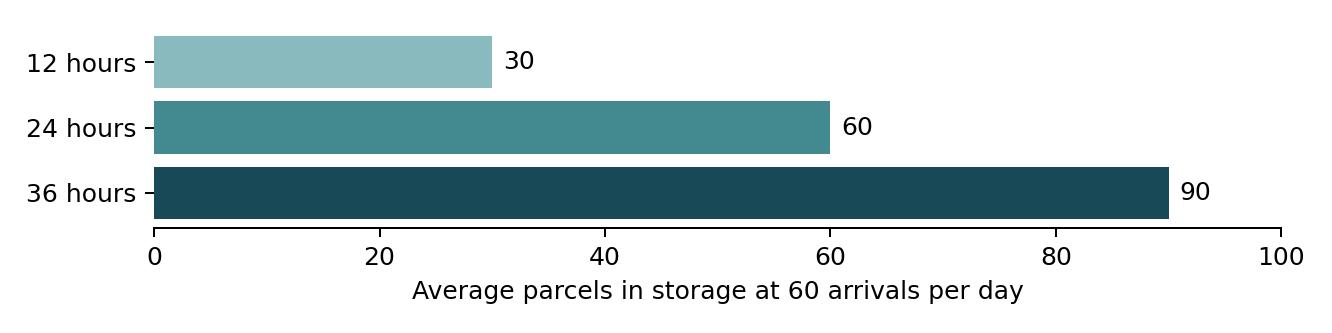
Start with arrival rate multiplied by average time to collection. At an illustrative 60 packages per day, an average stay of 12 hours means roughly 30 packages in storage. At 24 hours, it means 60. This estimate assumes steady arrivals and one parcel per compartment. Add room for delivery waves, weekend absences and the actual size mix before choosing a door count.
What makes a locker transaction accountable
A delivery scan tells a resident the carrier reached the address. A locker record can answer the next questions. Which compartment received the parcel? Was an item deposited? When was it removed? For a resident standing beside an empty door, the distinction matters immediately.
Package Nexus uses patented On-Auto-Pilot technology to detect placement and removal. A carrier identifies the recipient and deposits the item in the assigned compartment. The system records the event and sends pickup details. A resident scans a credential for touchless kiosk access or uses an available input method. The locker releases the assigned door and records removal. Nobody needs to answer “Did you deliver?” or “Did you pick up?” to validate those physical events.
The missed confirmation that creates a service ticket
Consider a courier who loads the compartment and walks away as the screen times out. In a workflow that depends on a final tap, a box can be sitting behind a locked door while the resident waits for a message. Package Nexus can use the sensed deposit to complete a timed-out delivery. Its configured recovery workflows also address unregistered deposits, empty-locker attempts and doors left open. Staff can focus on exceptions that need judgment, such as a carrier choosing the wrong resident.
Package Nexus estimates that 5–15% of manual confirmations can be wrong or missing. That is a company estimate of user inputs. The company describes its goal as 100% transparency and accountability for locker handoffs. In practice, the benefit is a record grounded in the compartment event, available when a manager needs to investigate a discrepancy.
What to compare in a live demonstration
In its smart locker comparison guide, Package Nexus classifies Luxer One and Package Concierge as first generation, Parcel Pending and Amazon Hub as second generation, and its own system as third generation. Package Nexus describes itself as the only provider of this third-generation system with its worldwide-patented On-Auto-Pilot workflow. It cites patent protection extending to 2040. Individual terms vary by country and grant, including the Australian patent announced through December 2038.
Ask each vendor to run the same three tests on the model being quoted. Deposit a parcel and leave before the final prompt. Open a compartment and leave the parcel inside. Then collect it. Ask to see the resident notification, the compartment status and the staff action required in each case. Those results tell a buyer more than a generation label alone.
What owners and operators gain
A concierge can stay with the resident
At a luxury property, the cost of manual handling is often visible at the worst moment. A concierge leaves a conversation to search shelves, a courier waits with a cart, and incoming boxes occupy the arrival area. With smart parcel lockers for apartments and condos, the driver and resident can complete routine handoffs independently. A neatly integrated bank of lockers keeps the entrance presentable during a tour and the service available late that evening.
Commercial components support continuous use
Package Nexus specifies an industrial-grade computer, a 15-inch touchscreen, a Braille keypad, a dedicated Honeywell 3320G barcode reader, cameras and speakers. A separate scanner can read a pickup credential while the screen displays instructions. Buyers can evaluate the environmental ratings and service options of each component for years of commercial use. Luxer One’s 2019 package-room manual, for example, identifies an iPad at the terminal. For a current comparison, request the exact computer, display, scanner, warranty and replacement procedure in each proposal.
A fully modular system can grow with occupancy
Package Nexus is 100% U.S.-owned and operated and offers a fully modular tower design. A phased community can start with ambient capacity, reserve adjacent wall space and add towers as buildings open. Where furniture cartons routinely exceed the largest door, an integrated package room can give those deliveries a designated destination. Confirm power, connectivity, floor space and service access for the expanded layout at the outset.
Put a value on fewer interruptions
Measure the minutes employees spend accepting, logging, storing, finding and handing over parcels. For example, 40 staff-assisted handoffs a day at three minutes each consume two staff hours. If 30 move to self-service, the gross time released is 90 minutes per day before exception handling. Compare measured time savings with installation, service, power and support costs.
After installation, track staff interventions per 100 deliveries, unavailable compartments by size, overnight occupancy and time from delivery to pickup. These measures reveal whether a building needs another tower, a larger compartment or a better route for drivers. To plan a project, request a locker layout and quote with the property’s peak volume, size mix and proposed location.
Frequently asked questions
Can residents and carriers both use parcel lockers around the clock?
Yes, when each can reach the installation around the clock. A resident’s fob may open a vestibule after hours while a courier needs a separate access arrangement. Test both routes during the hours advertised to residents, including the path from the unloading area.
Which lockers are best for luxury apartments and build-to-rent communities?
Choose a system that suits the building’s finish, provides a simple credential-based pickup and records what happened inside the compartment. Package Nexus combines custom finishes and wraps with automated verification. A good demonstration lets the leasing team see how the record changes when a resident opens a door but leaves the parcel in place.
Does the five-second delivery time include entry into the building?
Package Nexus reports about five seconds for a supported locker deposit. A full building stop also includes parking, entry, walking, handling the cart and any recipient lookup or exception. Time a representative delivery batch at the proposed location to estimate how long a carrier will actually spend there.
What happens when a compartment is empty or a delivery times out?
The configured On-Auto-Pilot workflow can use sensor and session information to identify an empty-locker attempt or complete a deposit left unfinished on screen. A property manager can review the event history when a question remains. Clear responsibility for unresolved items lets residents know whom to contact.
Can one installation accept ordinary parcels and groceries?
Yes. Ambient towers can share an installation with temperature-controlled towers selected for chilled, frozen or heated items. Plan the mix from actual deliveries and the time residents take to collect them. Establish a separate process for orders that arrive outside the property’s accepted conditions.
When should a community add more compartments?
Look for repeated shortages in the same door size during normal high-volume periods. If large doors are always full while small doors sit empty, a different mix may help more than simply adding doors. If most sizes fill together, check collection times and peak arrivals before selecting a modular expansion.

Package Nexus is the global technology leader and provider of The World's Most Advanced Smart Parcel Lockers for efficient and most simplified package management for multifamily communities, retailers, universities, libraries, corporate offices, groceries, and more. Package Nexus unique and patented technology offers a fix for human errors at the time of package deliveries and pickups. Package Nexus solutions help property, store, and office managers to improve their operations, reduce operating costs, and increase customer satisfaction at the same time. Package Nexus offers its entire suite of solutions globally.
USEFUL LINKS

© 2017-2026 Package Nexus